
solopreneur side hustle

  • ·

    18 Best Digital Products to Sell in 2026

    Many solopreneurs don’t struggle with ideas — they struggle with choosing the right digital product. The internet is crowded, attention is limited, and generic downloads don’t sell anymore.

    What works in 2026?
    Digital products that solve specific problems, are easy to distribute, and align with growing AI-powered workflows.

    Below is a curated, practical list of digital products that are in real demand — along with examples and platforms where they perform well.


    Digital products offer:

    • ✅ No inventory
    • ✅ Global reach
    • ✅ High margins
    • ✅ Easy automation
    • ⚡ Scalable distribution

    But success depends on positioning, not just uploading files.


    The 18 Best Digital Products for 2026

    ❶ eBooks in Micro-Niches

    Instead of broad topics like “Fitness Guide,” focus on:

    • Remote worker posture guides
    • AI tools for accountants
    • Budgeting for freelancers

    Best platforms: Amazon KDP, Gumroad


    ❷ Notion Templates

    Professionals love ready-made productivity systems:

    • CRM dashboards
    • Content calendars
    • Startup planning boards

    Platforms: Gumroad, Etsy


    ❸ AI Prompt Packs

    Curated prompt libraries for:

    • Marketing campaigns
    • SEO optimization
    • LinkedIn growth

    Platforms: Shopify, Lemon Squeezy


    ❹ Digital Planners

    High-demand categories include:

    • ADHD planners
    • Wedding organizers
    • Business goal planners

    Platforms: Etsy, KDP


    ❺ Online Mini-Courses

    Short, skill-specific lessons:

    • Canva design basics
    • AI automation workflows
    • Email marketing setup

    Platforms: Teachable, Kajabi


    ❻ Website Templates

    Pre-built themes for:

    • Coaches
    • Freelancers
    • SaaS startups

    Platforms: Shopify, Creative Market


    ❼ Resume & CV Kits

    Professionals constantly update resumes.
    Bundle:

    • Editable templates
    • Cover letter examples
    • LinkedIn optimization guide

    Platform: Etsy


    ❽ Printables for Kids

    Examples:

    • Learning activity sheets
    • Homeschool planners

    Platform: Etsy


    ❾ Stock Photo Bundles

    Niche-focused visuals:

    • Remote work setups
    • AI workspace imagery

    Platforms: Shopify, Gumroad


    ❿ Spreadsheet Tools

    Examples:

    • Budget trackers
    • Investment analysis sheets
    • Freelance income dashboards

    Platform: Etsy


    ⓫ Canva Social Media Kits

    Pre-designed content packs for small businesses.


    ⓬ AI Automation Blueprints

    Step-by-step workflow documents for automating tasks.


    ⓭ Audio Downloads

    Meditation scripts, focus tracks, productivity timers.


    ⓮ Membership Communities

    Private paid groups with curated resources.


    ⓯ Digital Art & Wall Prints

    Minimalist, niche-themed art files.


    ⓰ SaaS Micro-Tools

    Simple productivity or AI-powered tools solving one problem well.


    ⓱ Email Marketing Templates

    Pre-written campaigns for specific industries.


    ⓲ Data & Research Reports

    Industry insights packaged for professionals.


    💡 Choosing the Right Platform

    Each platform attracts a different buyer type:

    • Etsy → Creative & printable products
    • Gumroad → Digital creators & tech audience
    • Shopify → Brand builders
    • KDP → eBook and print products
    • Kajabi/Teachable → Courses

    Choose based on your audience, not trends.


    ⚖️ Benefits and Limitations

    Benefits

    • Low startup cost
    • Automation friendly
    • Location independent

    Limitations

    • Competitive categories
    • Requires positioning
    • Marketing still matters

    Digital products are assets — but not automatic income machines.


    🛠 Action Plan for Solopreneurs

    1. Identify a niche audience.
    2. Study what they repeatedly struggle with.
    3. Create one focused product.
    4. Launch on one platform only.
    5. Gather feedback.
    6. Improve and expand your product line.

    📌 Build a small portfolio instead of chasing viral success.


    👥 Who Should Build Digital Products?

    Ideal for:

    • Freelancers
    • Consultants
    • AI tool users
    • Side hustlers
    • Coaches

    Not ideal for:

    • Those seeking overnight profits
    • People unwilling to research
    • Creators avoiding iteration

    Final Thoughts

    Digital products in 2026 are no longer about selling random PDFs. They’re about solving targeted problems with clarity and precision.

    If you combine niche research, smart positioning, and consistent execution, digital products can become a reliable income stream — especially when enhanced with AI tools and automation.

    The opportunity is real. The strategy determines the outcome.
  • ·

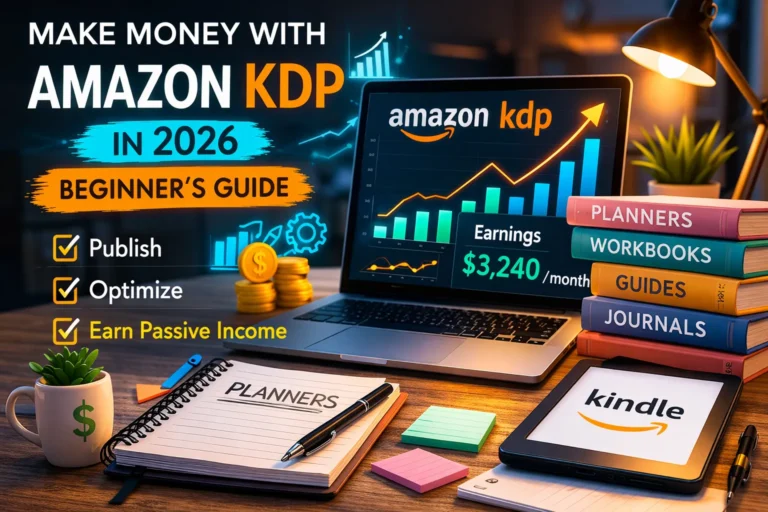
    Make Money with Amazon KDP in 2026

    How to Make Money with Amazon KDP in 2026 (Beginner’s Guide)

    Many beginners jump into Amazon KDP expecting instant passive income — and quit within months when results don’t appear. The issue isn’t the platform. It’s the strategy.

    Kindle Direct Publishing (KDP) remains one of the most accessible digital product businesses in 2026. But it rewards research, positioning, and consistency — not random uploads.

    Let’s break down how to approach KDP realistically and profitably.


    📌 What Makes KDP Still Relevant in 2026?

    Amazon is still the largest book marketplace globally. Unlike social platforms, where visibility fades quickly, books on Amazon continue generating traffic long-term through search.

    You’re not “posting content.”
    You’re building digital assets.

    KDP works especially well for:

    • Low-content books (planners, journals, trackers)
    • Workbooks and guided notebooks
    • Niche hobby guides
    • Professional templates converted into printable books
    • AI-assisted research-based guides

    The key is niche precision.


    🚀 Step 1: Choose a Niche That Has Demand — Not Just Trend

    Instead of chasing generic ideas like “fitness journal,” think micro-niches.

    For example:

    • ADHD planners for remote workers
    • Budget planners for single parents
    • Homeschool science experiment logbooks
    • Anxiety tracking journals for teens

    These aren’t random. They solve specific problems.

    💡 A quick validation method:
    Search your idea on Amazon.
    If:

    • There are books with reviews (demand exists)
    • But competition is not saturated with thousands of similar covers
    • And search suggestions appear in the dropdown

    You’re on the right track.


    ⚡ Step 2: Create With Structure, Not Guesswork

    You don’t need to be a designer. Tools like Canva, AI layout assistants, and research tools can speed up the process.

    For low-content books:

    • Maintain clean margins
    • Use consistent page layout
    • Avoid over-designed interiors
    • Focus on usability

    For informational books:

    • Add clear chapter structure
    • Include real examples
    • Provide actionable frameworks
    • Keep formatting professional

    AI tools can assist with outlines and idea expansion — but avoid publishing generic AI-generated manuscripts. Add real-world thinking and clarity.


    📊 Step 3: Optimize for Amazon SEO

    Publishing is not enough. Visibility matters.

    Key optimization areas:

    ✅ Title & Subtitle

    Include searchable keywords naturally.
    Example:
    “ADHD Daily Planner for Remote Professionals (6-Month Productivity System)”

    ✅ Backend Keywords

    Use all 7 backend keyword fields wisely. Avoid repeating title words.

    ✅ Categories

    Choose less competitive subcategories. Ranking #3 in a niche category is better than #2000 in a broad one.


    💰 How Much Can You Earn?

    KDP income varies widely.

    Royalty structure:

    • 60% for paperbacks (minus printing costs)
    • 70% for eBooks (in selected price ranges)

    Most beginners make:

    • $50–$300/month initially
    • With 5–10 well-optimized books

    Serious publishers treat it like a portfolio business.

    Instead of 1 viral book, aim for:
    📌 15–20 targeted assets over time.


    ⚖️ Benefits and Limitations

    Benefits

    • Low startup cost
    • No inventory
    • Global distribution
    • Long-term discoverability

    Limitations

    • Competitive niches
    • Requires research patience
    • Initial learning curve
    • Marketing may still be required

    KDP is not a shortcut. It’s a system.


    🛠 Action Plan for Beginners

    If you’re starting today:

    1. Pick one micro-niche.
    2. Research 10 competing books.
    3. Identify gaps (cover quality, layout flaws, missing features).
    4. Create one improved version.
    5. Optimize listing.
    6. Track performance for 30 days.
    7. Repeat strategically.

    Consistency beats creativity here.


    👥 Who Should (and Shouldn’t) Try KDP?

    Ideal for:

    • Solopreneurs building digital assets
    • Side hustlers wanting scalable income
    • Designers with layout skills
    • Researchers who enjoy niche markets

    Not ideal for:

    • People expecting overnight income
    • Those unwilling to do keyword research
    • Creators avoiding iteration

    Final Thoughts

    Amazon KDP in 2026 isn’t about flooding the marketplace. It’s about understanding search intent and solving specific problems in structured formats.

    If you treat each book like a small business asset — not a random upload — KDP can become a steady digital income stream.

    The opportunity still exists. The approach just needs to be smarter.