AI automation workflows

  • ·

    How to Use Grok AI for Research and Productivity

    Most AI assistants are extremely good at structured tasks like writing emails, summarizing documents, or explaining technical concepts. But when professionals want live insights, public sentiment, or emerging trends, traditional AI tools can fall short.

    A marketer researching product feedback, for example, might ask an AI assistant about a trending app only to receive generic background information. What they actually need is current conversation analysis.

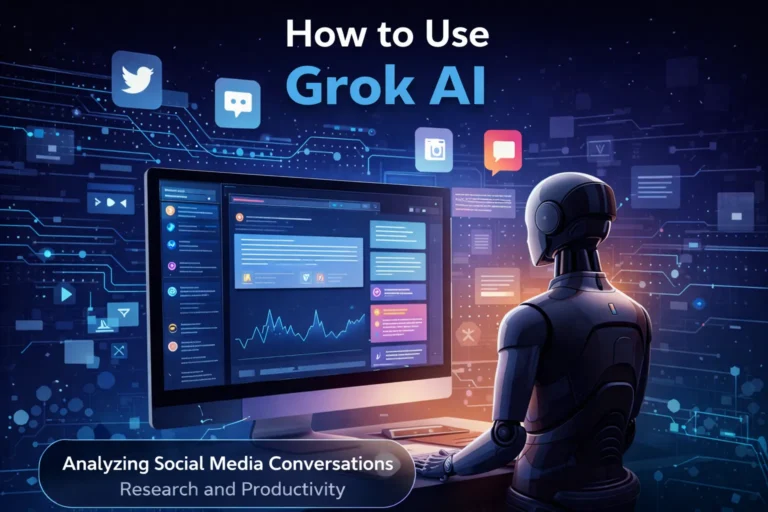
    This is where Grok, developed by xAI, offers something slightly different. Because it integrates with X, Grok can interpret ongoing public discussions.

    Used correctly, Grok becomes less of a chatbot and more of a real-time research assistant.

    This guide walks through how professionals can use Grok effectively without relying on guesswork or hype.


    Before diving into the tutorial, it helps to understand Grok’s strengths.

    Unlike many AI systems trained primarily on static datasets, Grok focuses heavily on social conversation analysis. That means it can detect patterns in how people are discussing topics online.

    This capability makes it useful for:

    Trend monitoring
    📊 Public sentiment analysis
    💡 Content ideation
    🔍 Market research

    However, Grok should not be treated as a perfect source of truth. Social media data can contain noise, misinformation, and emotional reactions.

    The key is learning how to ask the right questions.


    Currently, Grok is integrated directly into the X platform interface.

    To access it:

    • Log into your X account
    • Navigate to the Grok interface
    • Open a conversation window

    Once inside the chat environment, you can begin asking questions similar to other AI assistants.


    One mistake beginners make is asking overly generic prompts.

    Instead of:

    “Tell me about electric vehicles.”

    Ask:

    “What are people currently complaining about with electric vehicles?”

    Grok works best when you ask questions related to opinions, reactions, or discussions.

    Examples of effective prompts:

    • “What are users saying about the latest iPhone release?”
    • “What concerns are developers discussing about AI regulation?”
    • “What are common complaints about popular productivity apps?”

    These questions trigger Grok’s strength: conversation pattern analysis.


    Grok is particularly useful for spotting patterns early.

    Example scenario:

    A SaaS founder researching customer needs might ask:

    • “What productivity problems do remote workers complain about most?”

    Grok may highlight recurring frustrations such as:

    • meeting overload
    • task management fragmentation
    • collaboration tool fatigue

    Those insights can help shape product features or marketing messaging.


    Content creators often struggle with topic selection.

    Grok can help surface ideas based on real audience interest.

    Example workflow:

    1️⃣ Ask Grok what people are discussing about a topic
    2️⃣ Identify common frustrations or questions
    3️⃣ Turn those insights into article ideas

    Example output:

    • “Why remote workers dislike traditional productivity apps”
    • “Top complaints about AI writing tools”
    • “What freelancers actually want from automation tools”

    This process grounds content in real conversations rather than assumptions.


    Here are some practical ways professionals can integrate Grok into their workflow.

    📈 Digital Marketing Research

    Marketers can analyze how audiences react to competitors.

    Example prompt:

    “What are people criticizing about popular email marketing tools?”

    The results may reveal usability complaints or pricing concerns.


    🧩 Product Development Feedback

    Startup founders can monitor how users talk about competing products.

    Instead of conducting expensive research studies, Grok can reveal informal but valuable insights.


    📰 News and Trend Monitoring

    Analysts and journalists can track how narratives evolve around major events.

    This helps identify:

    • emerging opinions
    • misinformation patterns
    • shifts in public sentiment


    ✔ Advantages

    • Access to real-time discussion trends
    • Useful for audience research
    • Helps discover unexpected perspectives
    • Faster than manual social monitoring

    ⚠ Limitations

    • Social media data can be noisy
    • Trends may be temporary or exaggerated
    • Not ideal for academic-level research

    The most effective approach is using Grok alongside other AI tools, not replacing them.


    Grok works best for professionals who rely on audience insight and trend awareness.

    Ideal users include:

    • digital marketers
    • startup founders
    • content strategists
    • journalists
    • social media analysts

    Who may not benefit as much

    • developers needing coding support
    • academic researchers requiring verified sources
    • enterprises needing strict data validation


    Grok AI introduces an interesting shift in how AI assistants gather knowledge. Instead of relying solely on training data, it interprets ongoing conversations happening online.

    For professionals in marketing, research, and digital business, that capability offers a valuable advantage: real-time awareness of what people are actually discussing.

    Used thoughtfully, Grok becomes less of a chatbot and more of a social intelligence tool that helps guide better decisions.
  • ·

    Grok AI vs ChatGPT: Features and Real Use Cases

    Artificial intelligence tools are evolving rapidly, but most of them follow a similar pattern: static training data, controlled outputs, and limited real-time awareness. That model works well for structured tasks like coding assistance or writing help. However, it struggles when users want current insights, cultural context, or social trends.

    That gap is where Grok, developed by xAI, enters the picture.

    Unlike many AI assistants that rely primarily on training datasets, Grok was designed to connect directly with X (formerly Twitter). This integration allows the model to analyze public conversations, trending topics, and real-time discussions.

    For professionals working in marketing, research, or online business, that difference can significantly change how AI is used in daily workflows.


    At its core, Grok functions as a conversational AI assistant similar to ChatGPT or Claude. Users can ask questions, generate text, analyze ideas, or explore technical topics.

    But Grok was intentionally designed with a different philosophy: context awareness from live data.

    Key capabilities include:

    Real-time information access
    Grok can interpret current discussions happening on X, making it useful for trend monitoring and sentiment analysis.

    📊 Social conversation insights
    It can summarize how people are reacting to a topic rather than just describing the topic itself.

    🧠 Conversational reasoning
    Grok aims to produce more informal and context-aware answers compared with some traditional AI assistants.

    🔎 Idea exploration and brainstorming
    Because it pulls from real discussions, it can surface unexpected perspectives that static datasets might miss.

    For example, a digital marketer researching a product launch could ask Grok:

    “What are people complaining about in the latest smartphone release?”

    Instead of returning a generic answer, the AI can analyze current posts and highlight common concerns.


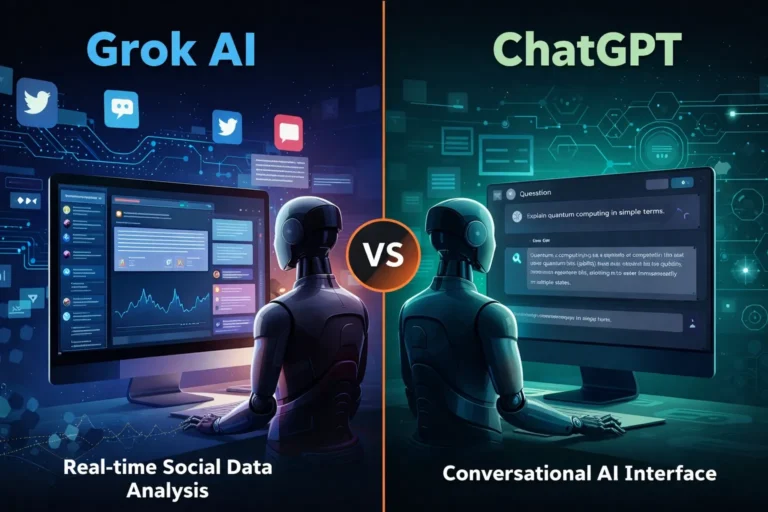
    While both systems function as AI assistants, their strengths are slightly different.

    🔹 Data Sources

    Grok

    • Strong connection to real-time social data
    • Useful for trend discovery and sentiment analysis

    ChatGPT

    • Primarily trained on large datasets and structured knowledge
    • Strong for reasoning, coding, and documentation

    🔹 Content Tone

    Grok often responds with a more conversational tone, reflecting its connection to social platforms.

    ChatGPT generally produces more structured, formal responses, which can be useful for professional documentation.

    🔹 Business Applications

    ChatGPT remains stronger in areas like:

    • code generation
    • structured writing
    • workflow automation
    • technical problem solving

    Grok shows promise in areas such as:

    • social trend monitoring
    • public sentiment analysis
    • cultural context research

    For professionals, the tools may complement rather than replace each other.


    Here are practical scenarios where Grok can be particularly useful.

    📈 Marketing trend research

    Marketers can analyze what audiences are discussing about a brand or industry.

    Example:
    A SaaS founder launching a productivity app could analyze conversations around productivity tools to identify common complaints.

    🧩 Product feedback discovery

    Companies can quickly identify how users feel about competing products.

    This type of insight traditionally required expensive social listening tools.

    📰 News and narrative monitoring

    Journalists, analysts, and researchers can track how a story evolves across social media conversations.

    💡 Content brainstorming

    Creators and writers can explore trending topics that resonate with real audiences.

    Instead of guessing what people want to read, Grok can surface ideas based on live discussion patterns.


    Like any AI system, Grok has strengths and trade-offs.

    ✔ Benefits

    • Access to real-time conversations
    • Useful for trend discovery
    • Insight into public sentiment
    • Unique perspective compared to traditional AI tools

    ⚠ Limitations

    • Social data may contain noise or misinformation
    • Real-time data can introduce bias or emotional reactions
    • Not always ideal for technical or academic analysis

    Professionals should treat Grok as a research assistant rather than a final authority.


    If you’re running an online business or digital project, Grok works best when integrated into a broader workflow.

    Practical workflow example

    1️⃣ Trend discovery using Grok
    2️⃣ Content research and structure using ChatGPT
    3️⃣ Publishing strategy based on validated audience interests

    This layered approach combines real-time insight with structured AI reasoning.


    Grok may be especially valuable for:

    • digital marketers
    • startup founders
    • journalists and analysts
    • social media strategists
    • creators researching audience interests

    Who may not benefit as much

    • developers needing deep coding assistance
    • academic researchers needing highly verified sources
    • enterprises requiring strict moderation controls


    AI tools are gradually moving from static knowledge systems toward dynamic intelligence connected to real-world conversations. Grok represents an early experiment in that direction.

    While it may not replace traditional AI assistants like ChatGPT, its ability to interpret live social discussions creates new possibilities for research, marketing, and trend discovery.

    For professionals exploring AI workflows, Grok is less about replacing existing tools and more about adding a new layer of real-time insight to decision making.