If you are a content manager or niche site builder, you know the current reality: the SERPs are hungrier than ever. The old playbook of manually researching keywords, crafting individual briefs, and managing a dozen freelance writers on Trello is becoming unsustainable. It’s too slow and too expensive to compete with competitors who have figured out velocity.
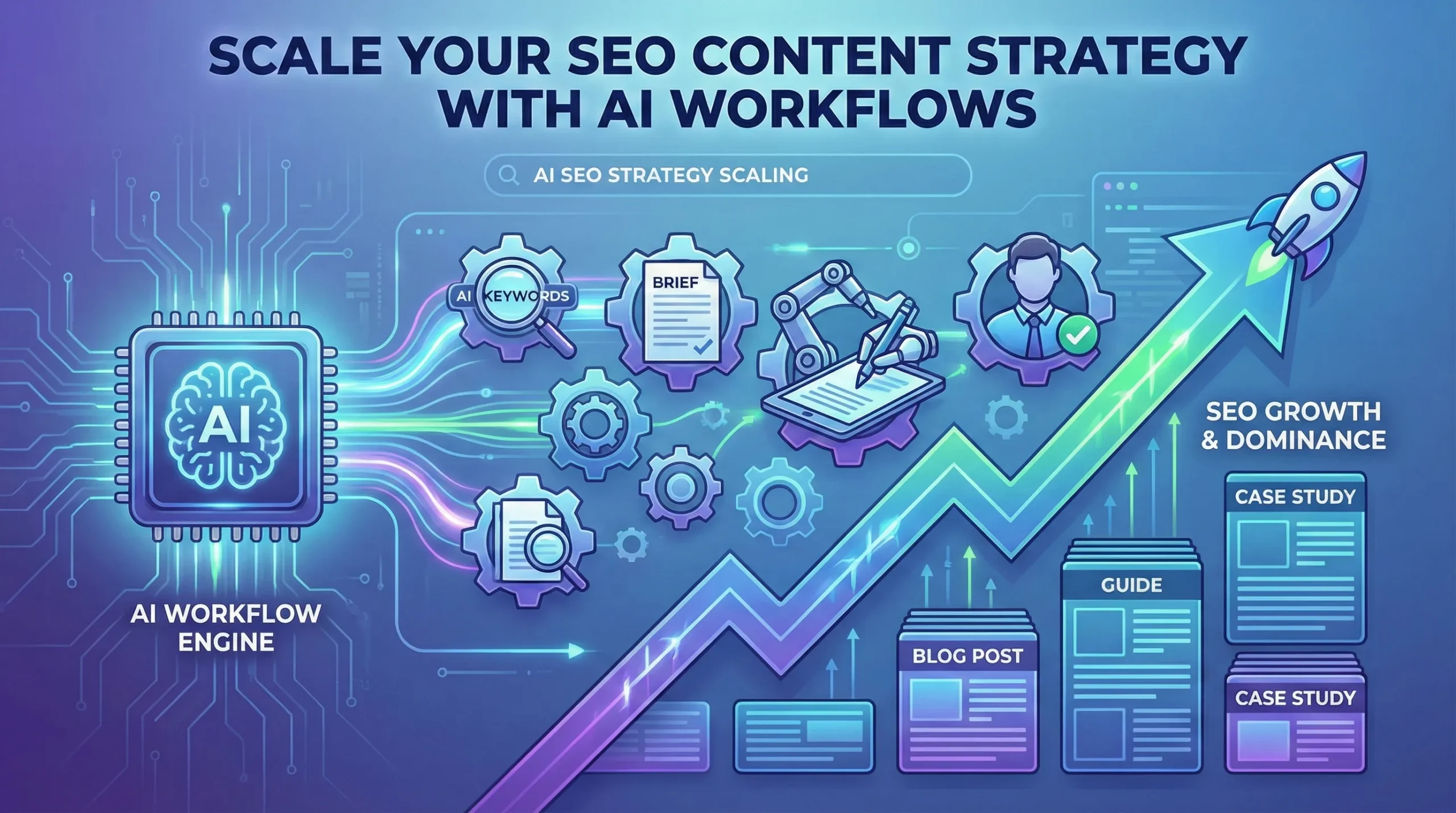
To win at search today, you cannot just “use AI to write.” You need to build an AI SEO strategy that turns manual bottlenecks into automated workflows.
Scaling isn’t about asking ChatGPT to write 50 articles in one giant prompt—that’s a recipe for generic, low-ranking “slop.” True scale comes from deconstructing the SEO process and using AI to handle the repetitive heavy lifting, leaving the high-value strategic thinking to humans.
Here is how to graduate from basic prompting to building an enterprise-grade programmatic SEO engine.
Phase 1: Intelligent Keyword Clustering at Scale
The biggest mistake SEOs make with AI is starting with the writing phase. Scale starts with structure. You cannot dominate a niche by picking keywords one by one.
Instead of manually grouping keywords in spreadsheets, dump thousands of raw keyword ideas from tools like Ahrefs or Semrush into a CSV. Then, use ChatGPT’s Advanced Data Analysis feature to perform semantic clustering.
The Goal: Ask ChatGPT to group keywords not just by similar words, but by identical search intent. This turns a messy list of 5,000 keywords into a clean map of 300 distinct article topics, ensuring you don’t cannibalize your own rankings.
Phase 2: The Automated Content Brief Factory
Before you generate a single paragraph of draft copy, you must generate the instructions. The quality of your ChatGPT for SEO content output is directly tied to the quality of the input brief.
Don’t ask ChatGPT to “write an article about X.” Instead, create a workflow (perhaps using a tool like Make.com or Zapier chained to OpenAI’s API) that takes a target keyword and generates a comprehensive brief based on live SERP data.
Your automated brief should include:
The primary search intent (informational vs. commercial).
A suggested H2/H3 structure based on top-ranking competitors.
A list of semantic entities and NLP terms that must be included.
The specific questions the article needs to answer to win Featured Snippets.
Phase 3: The “Chain-of-Thought” Drafting Engine
Once you have a rock-solid brief, you can begin drafting. But don’t try to generate a 2,000-word guide in one shot. AI loses the thread on long outputs.
Build a workflow that chains prompts together. Step one generates the introduction based on the brief’s hook. Step two takes the introduction and the brief’s first H2 to write the next section, and so on. By breaking the task into modular chunks, you maintain context and improve factual accuracy.
Phase 4: The Human-in-the-Loop (E-E-A-T Layer)
This is where the elite SEOs separate themselves from the spammers. You cannot auto-publish raw AI output and expect long-term gains.
Your workflow must end in a human review queue. The AI is the architect and the bricklayer, but you are the site inspector. The human job is no longer drafting; it’s injecting Experience, Expertise, Authoritativeness, and Trustworthiness (E-E-A-T). Add unique data, personal anecdotes, expert quotes, and ensure the tone matches your brand.
By automating the research, briefing, and drafting phases, your team spends 80% of their time improving content quality, rather than staring at a blank page.
Managing multiple social media accounts manually can quickly become overwhelming. From creating content to posting consistently and analyzing results, it takes time and effort. That’s where AI tools for social media automation come in.
These tools help you generate content, schedule posts, optimize performance, and even design creatives — all with minimal manual work. Whether you’re a marketer, freelancer, or business owner, using AI can significantly boost your productivity and engagement.
In this guide, we’ll explore the best AI tools for social media automation, including powerful platforms like AdCreative.ai, Ocoya, and Copy.ai.
AI tools streamline content creation and automatically publish posts across social platforms
🚀 Why This Topic Matters
Social media success depends on consistency, creativity, and timing.
AI tools help you:
Save hours every week
Post consistently
Improve engagement rates
Scale content production
For businesses, this means faster growth with fewer resources.
Quick Tool Summary
🏆 Best Overall — Ocoya 💰 Best Budget — Copy.ai 🚀 Best for Beginners — Buffer ⚡ Best for Ads & Creatives — AdCreative.ai
Plan and organize your social media strategy using a structured content calendar
Description: Ocoya is an all-in-one AI marketing tool designed specifically for social media automation. It combines content creation, scheduling, and analytics in one platform.
Description: AdCreative.ai focuses on generating high-converting ad creatives using AI, making it ideal for social media advertising campaigns.
Key Features:
AI-generated ad creatives
Conversion-focused designs
Performance scoring
Multiple ad variations
Pros:
Excellent for paid ads
High-quality creatives
Data-driven
Cons:
Not a full scheduler
Premium pricing
Best For: Advertisers and eCommerce brands
🔹 Copy.ai (Best Budget Tool)
Description: Copy.ai helps you generate captions, posts, and marketing copy for social media in seconds.
Key Features:
AI caption generator
Content templates
Multi-language support
Fast output
Pros:
Affordable
Beginner-friendly
Saves time
Cons:
No scheduling feature
Needs editing
Best For: Freelancers and beginners
🔹 Buffer
Description: Buffer is a simple and reliable social media scheduling tool with AI assistance for content ideas.
Key Features:
Post scheduling
Analytics
Clean UI
Pros:
Easy to use
Affordable
Great for beginners
Cons:
Limited automation features
Best For: Small businesses
🔹 Hootsuite AI
Description: Hootsuite offers advanced automation, scheduling, and analytics powered by AI.
Key Features:
Multi-platform management
AI recommendations
Deep analytics
Pros:
Enterprise features
Strong reporting
Cons:
Expensive
Best For: Agencies
📊 Practical Use Cases
Schedule a week’s content in minutes
Generate captions instantly
Create ad creatives with AI
Manage multiple accounts
Analyze engagement automatically
⚖️ Benefits and Limitations
Benefits:
Saves time
Boosts productivity
Improves consistency
Scales content creation
Limitations:
Requires subscriptions
Limited human creativity
Learning curve
🛠️ How to Get Started
Choose a tool based on your goal
Connect your social accounts
Generate content using AI
Schedule posts
Track performance
Boost productivity by managing social media with AI tools and real-time analytics
📊 Comparison Table
Tool
Best For
Key Feature
Pricing
Ocoya
All-in-one
AI + Scheduling
Mid-range
AdCreative.ai
Ads
AI Creatives
Premium
Copy.ai
Content Writing
AI Copywriting
Budget
Buffer
Beginners
Simple Scheduling
Affordable
Hootsuite
Agencies
Advanced Analytics
Expensive
✅ Conclusion
AI tools for social media automation are transforming how businesses and creators manage their online presence. With tools like Ocoya, AdCreative.ai, and Copy.ai, you can automate content creation, improve engagement, and scale your growth effortlessly.
If you’re just starting, go with Copy.ai or Buffer. If you want full automation, Ocoya is your best bet. And for ads, AdCreative.ai is unmatched.
Why Many Professionals Struggle With Real-Time AI Research
Most AI assistants are extremely good at structured tasks like writing emails, summarizing documents, or explaining technical concepts. But when professionals want live insights, public sentiment, or emerging trends, traditional AI tools can fall short.
A marketer researching product feedback, for example, might ask an AI assistant about a trending app only to receive generic background information. What they actually need is current conversation analysis.
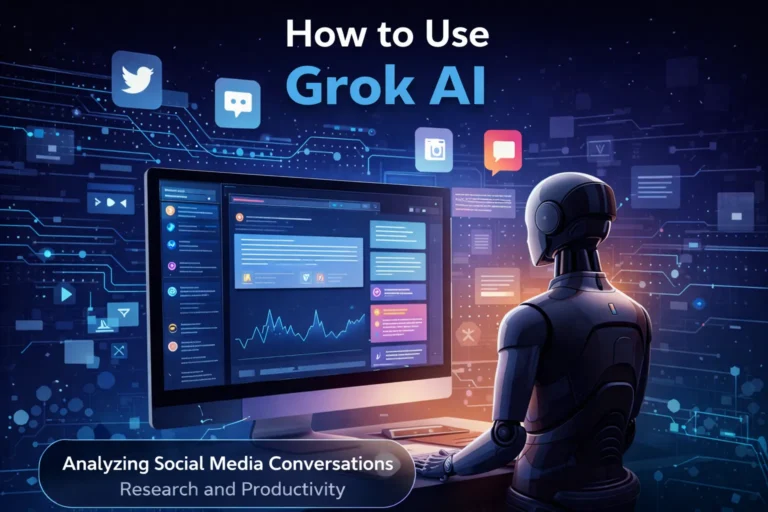
This is where Grok, developed by xAI, offers something slightly different. Because it integrates with X, Grok can interpret ongoing public discussions.
Used correctly, Grok becomes less of a chatbot and more of a real-time research assistant.
This guide walks through how professionals can use Grok effectively without relying on guesswork or hype.
What Grok AI Is Designed to Do
Before diving into the tutorial, it helps to understand Grok’s strengths.
Unlike many AI systems trained primarily on static datasets, Grok focuses heavily on social conversation analysis. That means it can detect patterns in how people are discussing topics online.
This capability makes it useful for:
⚡ Trend monitoring 📊 Public sentiment analysis 💡 Content ideation 🔍 Market research
However, Grok should not be treated as a perfect source of truth. Social media data can contain noise, misinformation, and emotional reactions.
The key is learning how to ask the right questions.
Step-by-Step: How to Use Grok AI
Step 1 — Access Grok Through X
Currently, Grok is integrated directly into the X platform interface.
To access it:
• Log into your X account • Navigate to the Grok interface • Open a conversation window
Once inside the chat environment, you can begin asking questions similar to other AI assistants.
Step 2 — Ask Context-Based Questions
One mistake beginners make is asking overly generic prompts.
Instead of:
“Tell me about electric vehicles.”
Ask:
“What are people currently complaining about with electric vehicles?”
Grok works best when you ask questions related to opinions, reactions, or discussions.
Examples of effective prompts:
• “What are users saying about the latest iPhone release?” • “What concerns are developers discussing about AI regulation?” • “What are common complaints about popular productivity apps?”
These questions trigger Grok’s strength: conversation pattern analysis.
Step 3 — Identify Emerging Trends
Grok is particularly useful for spotting patterns early.
Example scenario:
A SaaS founder researching customer needs might ask:
• “What productivity problems do remote workers complain about most?”
Grok may highlight recurring frustrations such as:
meeting overload
task management fragmentation
collaboration tool fatigue
Those insights can help shape product features or marketing messaging.
Step 4 — Use Grok for Content Research
Content creators often struggle with topic selection.
Grok can help surface ideas based on real audience interest.
Example workflow:
1️⃣ Ask Grok what people are discussing about a topic 2️⃣ Identify common frustrations or questions 3️⃣ Turn those insights into article ideas
Example output:
• “Why remote workers dislike traditional productivity apps” • “Top complaints about AI writing tools” • “What freelancers actually want from automation tools”
This process grounds content in real conversations rather than assumptions.
Real-World Use Cases
Here are some practical ways professionals can integrate Grok into their workflow.
📈 Digital Marketing Research
Marketers can analyze how audiences react to competitors.
Example prompt:
“What are people criticizing about popular email marketing tools?”
The results may reveal usability complaints or pricing concerns.
🧩 Product Development Feedback
Startup founders can monitor how users talk about competing products.
Instead of conducting expensive research studies, Grok can reveal informal but valuable insights.
📰 News and Trend Monitoring
Analysts and journalists can track how narratives evolve around major events.
This helps identify:
• emerging opinions • misinformation patterns • shifts in public sentiment
Benefits and Limitations
✔ Advantages
• Access to real-time discussion trends • Useful for audience research • Helps discover unexpected perspectives • Faster than manual social monitoring
⚠ Limitations
• Social media data can be noisy • Trends may be temporary or exaggerated • Not ideal for academic-level research
The most effective approach is using Grok alongside other AI tools, not replacing them.
Who Should Use Grok AI
Grok works best for professionals who rely on audience insight and trend awareness.
Ideal users include:
• digital marketers • startup founders • content strategists • journalists • social media analysts
Who may not benefit as much
• developers needing coding support • academic researchers requiring verified sources • enterprises needing strict data validation
Conclusion
Grok AI introduces an interesting shift in how AI assistants gather knowledge. Instead of relying solely on training data, it interprets ongoing conversations happening online.
For professionals in marketing, research, and digital business, that capability offers a valuable advantage: real-time awareness of what people are actually discussing.
Used thoughtfully, Grok becomes less of a chatbot and more of a social intelligence tool that helps guide better decisions.
If you are a Shopify store owner or an Amazon FBA seller, you know that scaling your catalog comes with a massive administrative hangover. Every new SKU you add requires SEO-optimized copy, feature extraction, and competitive pricing strategies. Doing this manually for ten products is annoying; doing it for ten thousand is impossible.
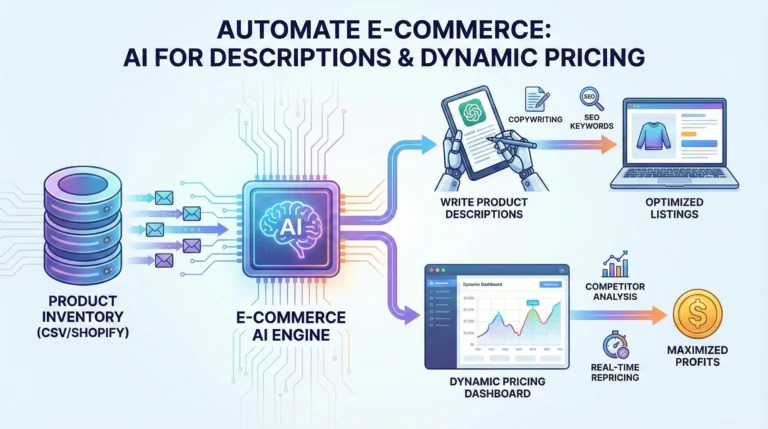
The smartest e-commerce managers are no longer throwing human hours at these repetitive tasks. Instead, they are leveraging artificial intelligence to build automated systems that write high-converting copy and adjust prices in real-time.
Here is your tutorial on how to use AI for ecommerce to automate your product descriptions and supercharge your pricing strategy.
Part 1: Automating Product Descriptions at Scale
Writing generic product descriptions is a surefire way to kill your conversion rate. Shoppers want to know the benefits, but search engines need the features and keywords. Trying to balance both across thousands of products is where AI shines.
Moving Beyond the “One-by-One” Prompt If you are opening ChatGPT, pasting in a manufacturer’s spec sheet, and asking it to write a description one by one, you aren’t really automating. True automation requires bulk generation.
To build an automated content factory, you need to connect your product database (like a Google Sheet or CSV export of your Shopify inventory) directly to an AI language model using tools like Zapier, Make.com, or specialized apps like Copy.ai and Hypotenuse AI.
The Workflow:
The Trigger: A new product is added to your store database with basic attributes (Name, Color, Material, Dimensions).
The Prompt Template: Your automation tool sends these attributes to OpenAI with a strict prompt: “Act as an expert e-commerce copywriter. Using the provided specs, write a 100-word product description. Start with an emotional hook, follow with three bulleted benefits, and naturally weave in these SEO keywords. Tone: Premium and minimalist.”
The Output: The AI generates the description and instantly updates your Shopify or WooCommerce listing via API.
What used to take a copywriter a full week can now be executed across 5,000 SKUs while you grab a coffee.
Part 2: Winning the Buy Box with Dynamic Pricing AI
Having great product copy gets customers to your page, but pricing gets them to click “Add to Cart.” In the past, repricing meant setting basic rules (e.g., “always price my product $1 cheaper than Competitor X”). Today, rule-based pricing is obsolete.
Enter dynamic pricing AI.
Major players like Amazon make millions of repricing decisions every single day, evaluating relative market value without relying on manual input. Now, thanks to tools like Prisync, Intelis, and DynamicPricing AI, independent store owners have access to that exact same enterprise-level technology.
How AI Pricing Works: Instead of just scraping a competitor’s website, modern AI pricing tools ingest dozens of variables simultaneously. They analyze:
Real-time competitor stock levels (If your competitor sells out, the AI automatically raises your price to capture a higher margin).
Historical sales velocity and seasonal demand trends.
Your specific procurement costs and target profit margins.
Customer price elasticity (how sensitive your specific audience is to a $2 price hike).
Setting the Guardrails: The beauty of an ecommerce automation tutorial focused on pricing is that you remain in control. You never have to worry about the AI accidentally pricing a $100 jacket for $5. You set the absolute minimum margin floor (the “guardrails”), and the AI constantly tests price points above that floor to find the exact dollar amount that maximizes your total profit, not just your revenue.
Final Thoughts
The divide in e-commerce is no longer about who has the best product; it is about who has the best operational velocity. By automating your ChatGPT product descriptions and integrating dynamic pricing AI, you remove the human bottleneck from your catalog management. This frees you up to focus on what actually grows a business: sourcing better products, building a brand identity, and acquiring new customers.
Video content is dominating the internet. Platforms like YouTube, TikTok, Instagram Reels, and LinkedIn video have made video one of the most powerful ways to reach audiences online.
However, producing high-quality videos traditionally requires editing skills, expensive software, and significant time investment.
Artificial intelligence is now transforming this process.
AI video tools allow creators to generate videos from scripts, automatically edit clips, add voiceovers, and even create AI presenters. For entrepreneurs, bloggers, and marketers, this means producing professional video content without needing a full production team.
In this guide, we explore the best AI video tools for content creators and how they can help you scale content production faster and more efficiently.
An infographic illustrating the AI video creation workflow, where content creators transform an idea into a script, generate AI-powered videos, and publish them across digital platforms.
Why AI Video Tools Matter 🎥
Video production used to be complicated and time-consuming. AI technology now allows creators to automate many parts of the process.
With the right AI video tools, creators can:
• Produce videos much faster • Reduce editing time dramatically • Convert blog posts into videos • Create faceless YouTube channels • Scale social media marketing campaigns
For freelancers, content creators, and online businesses, these tools help produce more content with fewer resources.
Quick Tool Summary
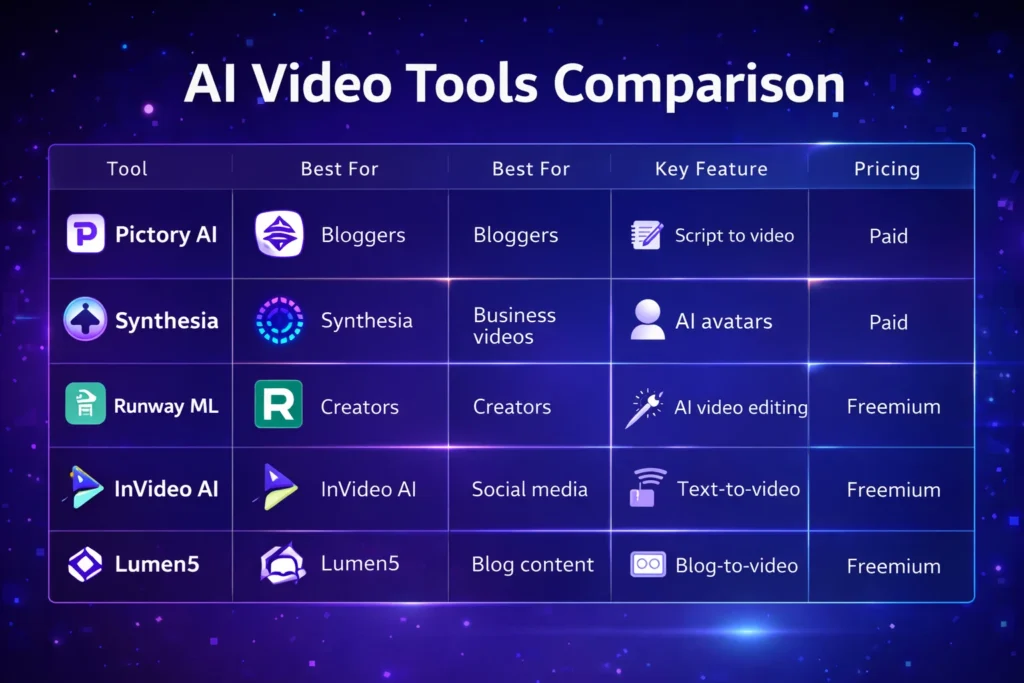
■ Best Overall:Pictory AI ■ Best Budget Option:InVideo AI ■ Best for Beginners: Lumen5 ■ Best for AI Avatars:Synthesia ■ Best for Advanced Creators: Runway ML
Top AI Video Tools for Content Creators
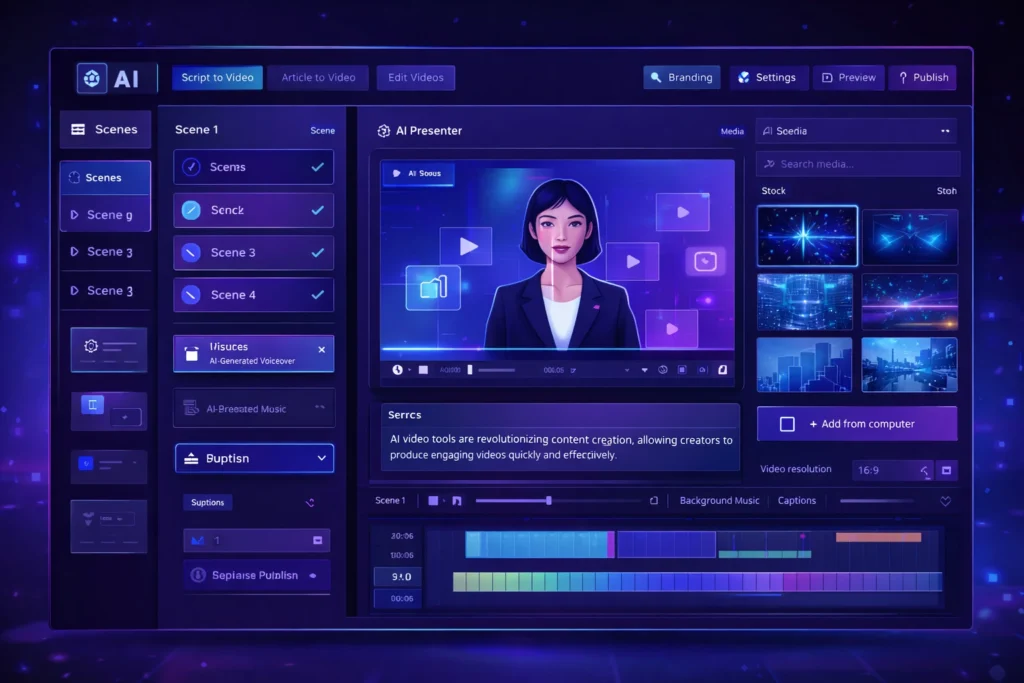
A modern AI video generator dashboard interface displaying an AI presenter, video editing timeline, and automation tools used by content creators to generate videos quickly.
Pictory AI is widely used by bloggers and YouTubers to convert scripts or articles into engaging videos. It automatically matches your script with visuals, adds captions, and generates voiceovers.
This makes it ideal for creating faceless YouTube content or repurposing blog posts.
Key Features
• Script-to-video automation • AI voiceovers • Automatic captions • Large stock footage library
Pros
• Very beginner friendly • Fast video creation
Cons
• Limited customization • Paid plans required for longer videos
Best For
Bloggers, YouTubers, and marketers creating educational or faceless video content.
Synthesia allows creators to generate videos using realistic AI avatars. Instead of recording yourself, you can simply write a script and the AI presenter delivers the message.
This is especially useful for business videos, training materials, and product explainers.
Key Features
• AI avatar presenters • Support for 120+ languages • Text-to-video generation • Professional video templates
Pros
• Professional looking presenters • Great for corporate and educational videos
Cons
• Premium pricing • Limited emotional expressions in avatars
Best For
Businesses, educators, and creators producing professional presentations.
Runway ML is one of the most advanced AI video platforms currently available. It includes powerful AI editing tools, video generation models, and creative features used by filmmakers and digital creators.
This platform is perfect for creators who want more advanced control over video production.
Key Features
• AI video generation tools • Automatic background removal • AI-powered video editing • Creative effects powered by AI models
Pros
• Advanced creative capabilities • Used by professional creators
Cons
• Learning curve for beginners • Higher cost for heavy usage
Best For
Professional creators, filmmakers, and advanced video editors.
InVideo AI focuses on creating videos directly from text prompts. Users simply describe the video they want, and the platform automatically generates visuals, voiceovers, and music.
It’s especially popular among marketers and social media creators.
Key Features
• AI text-to-video generator • Automated script creation • Huge media library • Social media optimized templates
Pros
• Affordable pricing • Simple user interface
Cons
• AI voice quality varies • Limited advanced editing features
Best For
Social media marketers and beginners creating short-form video content.
AI video tools are used for many different purposes.
Common use cases include:
• Creating faceless YouTube channels • Producing Instagram Reels or TikTok content • Repurposing blog articles into videos • Creating product marketing videos • Producing online course materials
Entrepreneurs and digital marketers are increasingly using AI tools to scale content creation across multiple platforms.
Benefits and Limitations
Benefits
• Faster content production • Lower production costs • No advanced editing skills required • Scalable content marketing strategy
Limitations
• Limited creative control in some tools • Subscription costs for premium features • AI-generated content may require manual editing
Despite these limitations, AI video technology continues to improve rapidly.
How to Get Started 🚀
If you are new to AI video tools, follow these steps:
Choose a beginner-friendly platform such as Pictory or InVideo.
Start with short video projects.
Experiment with AI voiceovers and templates.
Optimize videos for platforms like YouTube or TikTok.
Most platforms offer free trials, allowing creators to test the tools before upgrading.
A visual comparison chart highlighting key features, best use cases, and pricing models of leading AI video tools used by content creators.
Conclusion
AI video tools are transforming the way content creators produce video content.
Instead of spending hours editing footage, creators can now generate professional videos using artificial intelligence. Platforms like Pictory, Synthesia, Runway ML, InVideo AI, and Lumen5 make it easier than ever to create high-quality video content.
For entrepreneurs, bloggers, and digital marketers, adopting AI video tools can significantly improve productivity and help scale content marketing efforts.
As AI technology continues evolving, these tools will become an essential part of the modern creator’s workflow.
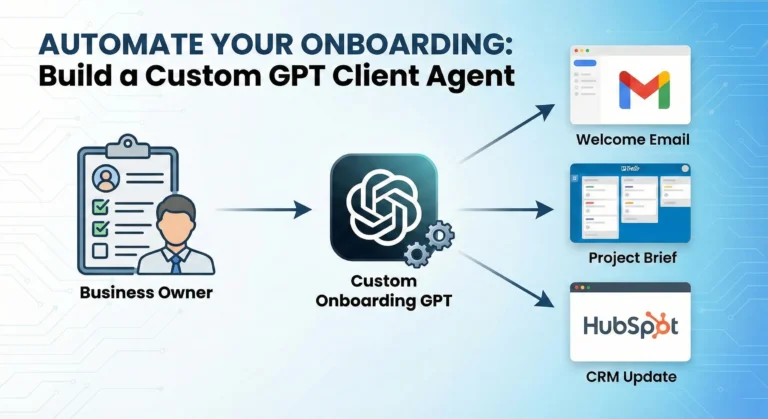
If you run an agency or consulting business, you already know the onboarding paradox. Landing a new client is the best feeling in the world, but the administrative hangover that immediately follows—sending welcome packets, chasing down brand assets, and setting up project management boards—is a massive drain on your time.
What if you could bottle up your exact onboarding process and hand it over to an AI?
Building a custom ChatGPT agent to handle your new client intake isn’t just a fun tech experiment; it is a scalable business asset. By combining OpenAI’s custom GPT capabilities with AI workflow automation, you can create an assistant that guides your clients, answers their initial questions, and drafts their strategy documents while you focus on the actual billable work.
Here is a step-by-step custom GPT tutorial to help you automate client onboarding and win back your week.
Step 1: Map the Workflow (Don’t Skip This)
A custom GPT is only as smart as the system you anchor it to. Before you even log into OpenAI, you need to document exactly what happens when a prospect says “yes.”
Grab a piece of paper and outline your current bottlenecks. What do you do on repeat?
Do you send the same welcome email with slightly tweaked variables?
Do you manually review intake forms to pull out key goals?
Do you spend an hour writing a project kickoff brief?
Pick one specific, repetitive phase of your onboarding process to automate first. A GPT built to “draft a custom project kickoff brief based on a client intake form” will perform ten times better than a GPT told to “handle my new clients.”
Step 2: Configure Your Custom GPT
Once your workflow is locked in, head over to ChatGPT. Note: You will need a paid Plus, Team, or Enterprise account to create and save custom GPTs.
Click on Explore GPTs in the left sidebar, then hit Create.
You will see a split screen. While it is tempting to use the “Create” tab to chat with the builder, switch over to the Configure tab. This gives you manual, granular control over how your agent behaves.
Give your assistant a name (e.g., Onboarding Co-Pilot) and a brief description.
Step 3: Write the System Prompt (The Brain)
The “Instructions” box is where the magic happens. A standard prompt like “write welcome emails for my clients” will give you generic, robotic outputs.
To make this tool an extension of your business, give it a strict persona, clear rules, and an expected output format. Try using this structure:
Role: You are the Senior Client Success Manager for [Your Agency Name]. Your job is to facilitate a seamless onboarding experience for new B2B clients.
Tone: Warm, professional, and concise. Avoid marketing jargon.
Task: When I upload a completed client intake form, you will generate three things: 1) A personalized welcome email. 2) A bulleted list of missing assets we need from the client. 3) An internal project brief for my team.
Boundaries: Never invent services we do not offer. If the intake form is missing critical budget data, explicitly flag it for my review.
Step 4: Upload Your Knowledge Base
This is what separates using ChatGPT for business from using it for parlor tricks. In the Knowledge section, upload the proprietary documents that make your agency unique.
Upload your standard operating procedures (SOPs), your service pricing tiers, past examples of excellent project briefs, and your brand tone guidelines. When the GPT generates an onboarding plan, it will actively reference these files so the output actually sounds like it came from your desk.
Pro Tip: Keep your knowledge files clean. Break large, messy PDFs into smaller, clearly titled text documents (e.g., Welcome_Email_Templates.pdf, Service_Tiers.pdf). This helps the AI pull the exact information it needs without hallucinating.
Step 5: Connect to AI Workflow Automation
Once your GPT is reliably analyzing intake forms and drafting emails, it is time to connect it to the rest of your tech stack.
Under the “Capabilities” section, you can set up Custom Actions. By connecting your GPT to tools like Zapier or Make, your agent can move from just writing text to actually executing tasks. You can configure it so that once the GPT generates the onboarding brief, it automatically pushes that data into a new Trello card, updates the client’s status in HubSpot or Salesforce, and drafts the welcome email directly in your Gmail drafts folder.
Final Thoughts
Treat your new custom GPT like a new hire. It will make a few mistakes in its first week. When it gives you an output you don’t like, don’t just fix the output manually—go back into the Configure tab and update the instructions so it learns for next time. Within a few weeks, you will have a rock-solid, automated client onboarding system that scales as fast as your agency does.
Artificial intelligence is transforming the way people build online businesses. Entrepreneurs, freelancers, and content creators are increasingly using AI tools to automate tasks, produce content faster, and create new revenue streams.
The biggest advantage of AI technology is accessibility. You no longer need advanced technical skills or expensive software to start an online business. Modern AI platforms allow users to create blog content, marketing graphics, and professional videos in just minutes.
Many successful online entrepreneurs are already building profitable AI-powered side hustles. With tools like Jasper AI, Canva, and Pictory, it is possible to produce high-quality digital content quickly and scale online income opportunities.
In this guide, you will learn practical strategies to make money with AI tools, the best tools available today, and how beginners can start an AI side hustle step by step.
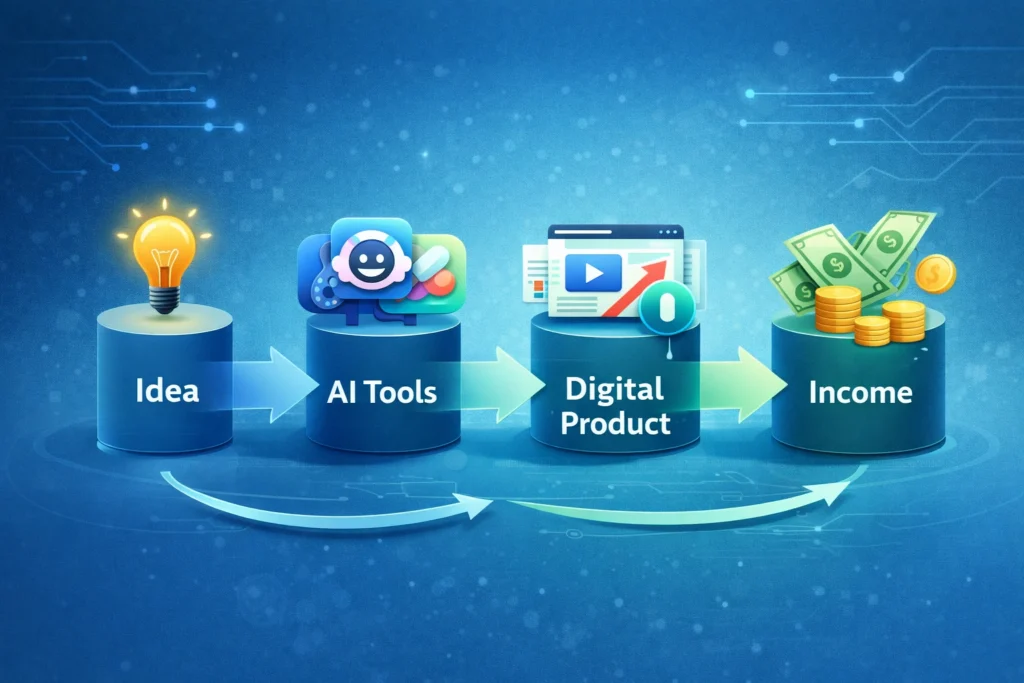
A simple AI workflow showing how an idea can be turned into a digital product and income using AI tools.
Why AI Side Hustles Matter in 2026
Artificial intelligence is becoming one of the most important drivers of the digital economy. Businesses across industries are using AI to automate marketing, create content, and improve productivity.
This growing adoption of AI has opened new opportunities for individuals who want to start online businesses.
Some key reasons AI side hustles are growing rapidly include:
• Businesses need more content than ever before • AI tools dramatically reduce production time • Startup costs for online businesses are lower • Digital marketing demand continues to increase • AI tools are becoming beginner-friendly
Because of these factors, AI-powered side hustles are becoming one of the most accessible ways to start making money online.
Best Ways to Make Money with AI Tools
There are several profitable opportunities where AI tools can help generate income.
AI Content Writing
AI writing tools such as Jasper AI allow freelancers and entrepreneurs to create blog posts, marketing copy, and product descriptions much faster than traditional writing.
Common services include:
• SEO blog writing • Website copywriting • Email marketing content • Product descriptions for eCommerce
Many freelance writers charge between $50 and $300 per article depending on the niche and content quality.
AI Graphic Design
Design platforms like Canva make it easy to create professional graphics even without design experience.
Using Canva’s AI features, users can create:
• Social media graphics • YouTube thumbnails • Marketing banners • Presentation designs • Digital product templates
These designs can be sold on marketplaces like Etsy, Fiverr, or Gumroad.
AI Video Creation
Video content is one of the fastest growing forms of digital media. AI tools like Pictory make it possible to create videos without advanced editing skills.
• Generating article outlines • Writing first drafts • Creating social media posts • Generating blog graphics
Blog monetization options include:
• Google AdSense • Affiliate marketing • Sponsored content • Digital products
Many bloggers now use AI tools to accelerate content publishing.
Best AI Tools for Making Money
Below are some of the most useful AI tools for building an AI-powered side hustle.
Popular AI tools like writing, design, and video creation platforms help entrepreneurs create content, digital products, and videos to generate online income.
Jasper AI
Jasper AI is one of the most powerful AI writing assistants designed for marketers, bloggers, and businesses.
It helps generate blog posts, marketing content, and long-form articles quickly.
Key Features
• AI blog post generator • SEO optimized content creation • Marketing templates • Brand voice customization
Pros
• Produces high-quality long-form content • Saves significant writing time
Cons
• Paid subscription required • Content may require editing
Best For
Bloggers, affiliate marketers, and freelance writers who want to scale content production.
Here are some real ways individuals and businesses use AI tools to generate income:
• Freelance content writing services • Selling digital design templates • Running YouTube automation channels • Building affiliate marketing blogs • Managing social media for businesses
AI technology does not replace creativity. Instead, it helps creators produce content faster and scale their work.
Benefits and Limitations of AI Tools
Benefits
• Faster content production • Lower startup costs • Beginner-friendly platforms • Ability to scale online businesses
Limitations
• AI content still requires editing • Competitive markets in some niches • Many advanced tools require subscriptions
Understanding these factors helps you build a sustainable AI-powered business.
How to Get Started with an AI Side Hustle
Starting an AI side hustle does not require major investments.
Follow these simple steps:
Choose a niche that interests you
Select AI tools that fit your goals
Start creating valuable content or services
Promote your work through social media or websites
Monetize through ads, affiliate programs, or client services
Consistency and quality will play the biggest role in long-term success.
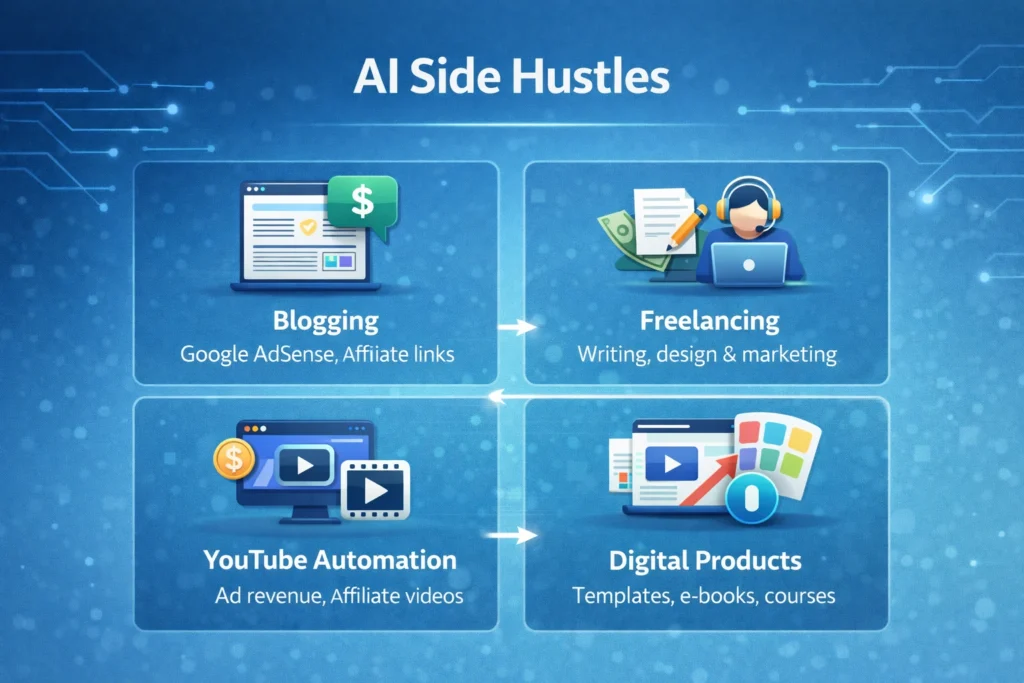
A visual comparison of popular AI side hustles such as blogging, freelancing, YouTube automation, and digital products that can generate income online.
Conclusion
Artificial intelligence is creating new opportunities for entrepreneurs, freelancers, and creators around the world. With the right strategy, AI tools can help build scalable online businesses and generate multiple income streams.
Platforms like Jasper AI, Canva, and Pictory allow individuals to produce content, graphics, and videos more efficiently than ever before.
If you are interested in starting an online business, learning how to use AI tools effectively could become one of the most valuable skills in the modern digital economy.