|

Gemini vs Grok vs ChatGPT: Which AI Actually Delivers?

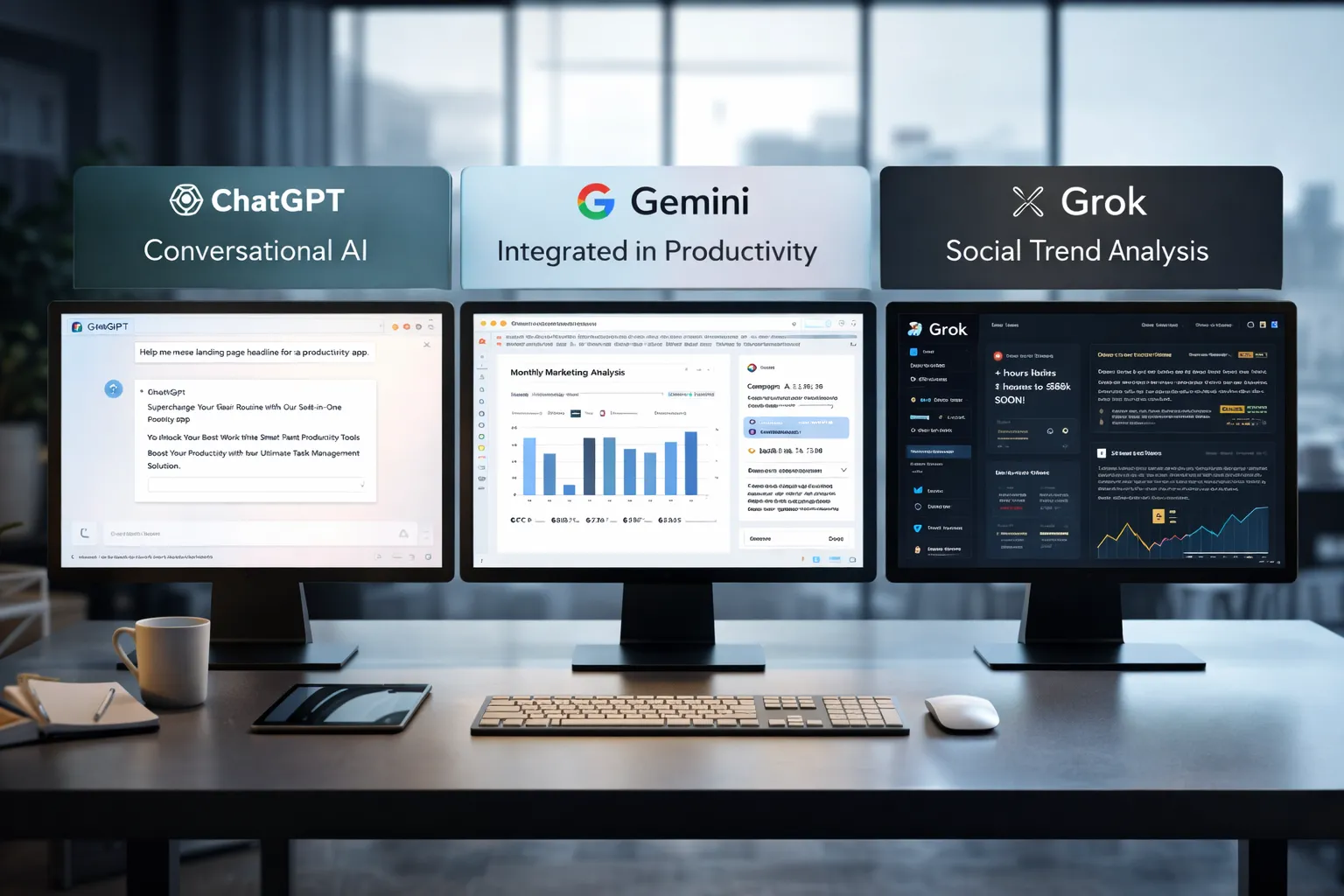
Side-by-side comparison of three AI platforms used for productivity, automation, and marketing workflows

AI tools are no longer novelty software. They’re embedded in marketing stacks, product teams, customer support desks, and solo founder workflows.

But here’s the real issue: most comparisons between Gemini, Grok, and ChatGPT focus on feature checklists — not actual business impact.

If you’re running campaigns, building SaaS products, automating workflows, or scaling digital operations, the question isn’t which AI is smartest.

The question is:

Which AI fits your workflow, risk tolerance, and monetization model?

Let’s break this down from a practical, business-first perspective.


🧠 Core Positioning: What Each Tool Is Really Built For

ChatGPT has become the default AI workspace for professionals.

It excels at:

  • Long-form content
  • Structured reasoning
  • Coding assistance
  • Workflow automation via APIs
  • Document summarization
  • Custom GPT workflows

For many entrepreneurs, ChatGPT acts as a “digital operations assistant.”

  • Draft landing pages
  • Generate ad variations
  • Build Zapier automation logic
  • Create client reporting templates

It’s flexible and ecosystem-friendly.


Gemini integrates deeply into Google’s ecosystem.

Its strength isn’t just intelligence — it’s context.

It works well with:

  • Google Docs
  • Gmail
  • Sheets
  • Drive
  • Workspace collaboration
  • Analyze campaign data directly in Sheets
  • Draft email updates inside Gmail
  • Summarize meeting notes automatically

Gemini is strongest when your business already lives inside Google.


Grok operates differently. It’s closely integrated with the X (formerly Twitter) ecosystem and emphasizes real-time information access.

Its positioning is:

  • Social intelligence
  • Real-time trend awareness
  • Edgier conversational style
  • Live internet awareness
  • Monitor sentiment shifts
  • Analyze breaking news
  • Generate rapid-response commentary

Grok shines in live environments. It’s less structured, more reactive.


⚙️ Real-World Productivity Comparison

Here’s where things matter for professionals.

For AI Automation Builders 🛠️

  • ChatGPT wins due to API maturity and plugin ecosystem.
  • Gemini is improving but less flexible for external automation.
  • Grok isn’t optimized for backend automation yet.

For AI Marketing Workflows 📈

  • ChatGPT: Best for structured funnel content, copy frameworks, strategy.
  • Gemini: Strong for ad analysis if you live in Google Ads.
  • Grok: Useful for trend-based content and social hooks.

For SaaS Founders 💻

  • ChatGPT: Product ideation, UX copy, code scaffolding.
  • Gemini: Useful for internal documentation collaboration.
  • Grok: Less relevant unless your SaaS is social-data-driven.

⚖️ Strengths and Limitations

ChatGPT

Pros

  • Deep reasoning
  • Advanced coding
  • API integrations
  • Custom GPT creation

Cons

  • May require prompt skill to maximize output
  • Enterprise pricing can scale

Gemini

Pros

  • Native Google ecosystem integration
  • Strong document collaboration
  • Smooth Workspace automation

Cons

  • Less customizable outside Google
  • Not as developer-centric

Grok

Pros

  • Real-time awareness
  • Social sentiment alignment
  • Direct integration with X

Cons

  • Not workflow-automation focused
  • Limited enterprise tooling

🚀 Practical Implementation Strategy

Instead of choosing just one, many professionals layer them.

Here’s a smart approach:

Step 1: Define Your Primary Use Case

Ask:

  • Is this content-heavy?
  • Is this data-heavy?
  • Is this trend-heavy?

Step 2: Assign Roles

  • ChatGPT → Strategy + structure
  • Gemini → Internal collaboration
  • Grok → Real-time market pulse

Step 3: Build Repeatable AI Workflows

For example:

  1. Use Grok to identify trending topics.
  2. Use ChatGPT to turn that into structured authority content.
  3. Use Gemini to distribute internally via Docs and Gmail.

This layered workflow reduces blind spots.


👥 Who Should Use What?

Choose ChatGPT If:

  • You build automation workflows
  • You write long-form content
  • You code or build SaaS tools
  • You need structured output

Choose Gemini If:

  • Your company runs on Google Workspace
  • You collaborate heavily in Docs/Sheets
  • You need built-in AI inside email

Choose Grok If:

  • You depend on real-time news
  • You operate in finance, crypto, politics, media
  • You build brand presence on X

🎯 Final Perspective

There isn’t a universal “best AI.”

There’s only:

  • Best for workflow
  • Best for ecosystem
  • Best for execution speed

ChatGPT is currently the most versatile.
Gemini is the most integrated.
Grok is the most reactive.

For serious professionals, the competitive edge isn’t the tool — it’s how intelligently you deploy it.

AI doesn’t replace strategic thinking.
It amplifies it.
Similar Posts

  • ·

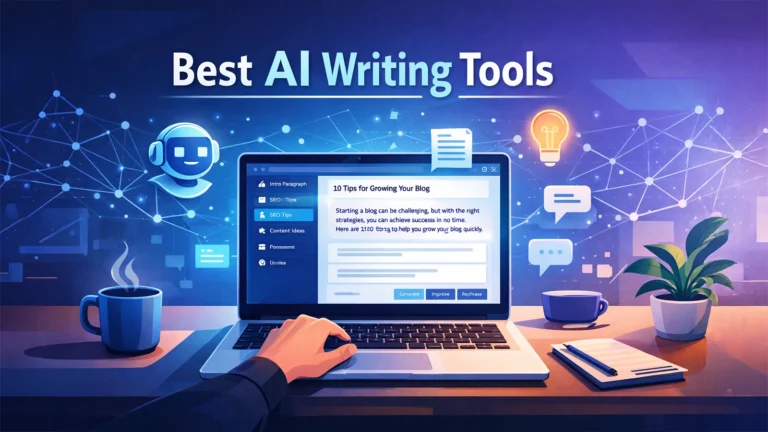
    Best AI Writing Tools for Bloggers in 2026: Tools That Actually Improve Content

    Creating consistent blog content can be challenging, especially when bloggers are expected to publish regularly while maintaining high quality. Research, outlining, drafting, editing, and optimizing for SEO all take time. As competition grows online, bloggers are increasingly looking for tools that can help streamline their workflow.

    AI writing tools have become powerful assistants for bloggers and content creators. Instead of replacing writers, these tools help generate ideas, draft articles, improve clarity, and speed up the content creation process. Many modern AI tools can also assist with SEO optimization, marketing copy, and productivity workflows.

    In this guide, we explore the best AI writing tools for bloggers in 2026, how they work, and how they can help bloggers create better content faster.

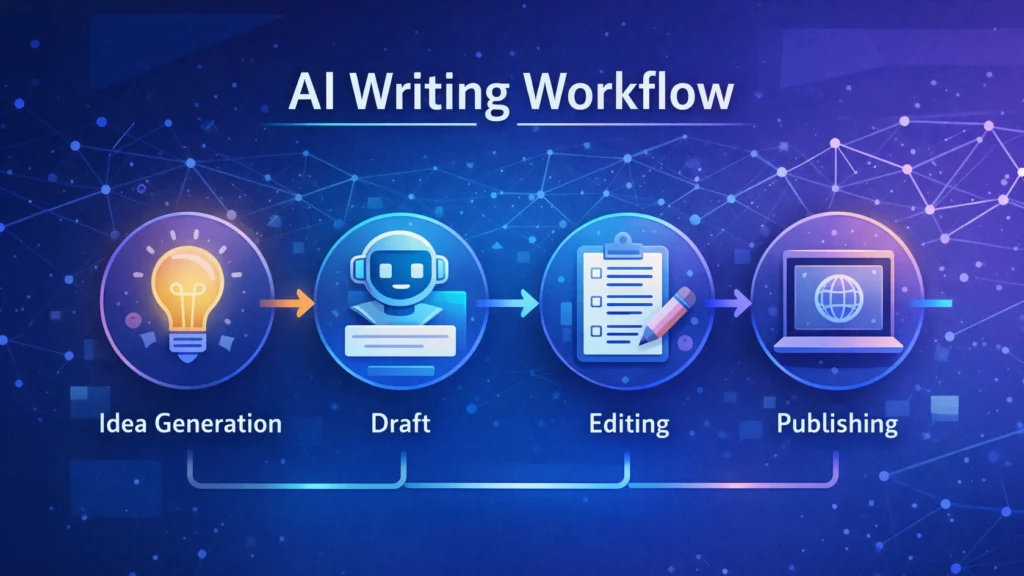
    Diagram showing an AI writing workflow including idea generation, drafting, editing, and publishing stages used by bloggers and content creators.
    A simple AI writing workflow illustrating how bloggers use AI tools to generate ideas, draft articles, edit content, and publish posts efficiently.

    Quick Tool Summary

    Best Overall: Jasper AI
    Best Budget Option: Rytr
    Best for Beginners: ChatGPT
    Best for Marketing Content: Copy.ai
    Best Productivity Tool: Notion AI


    Why Bloggers Are Using AI Writing Tools ✍️

    AI writing tools are becoming essential for bloggers for several reasons.

    Faster content creation

    AI can generate outlines, drafts, and ideas in seconds.

    Overcoming writer’s block

    Many bloggers use AI tools to brainstorm new content topics.

    Content scaling

    AI allows bloggers to produce more articles without sacrificing quality.

    SEO support

    Some tools assist with keyword integration, readability, and structure.

    These advantages make AI writing tools particularly useful for entrepreneurs, marketers, and freelancers managing multiple content projects.


    Best AI Writing Tools for Bloggers

    Below are some of the most widely used AI writing tools available today.

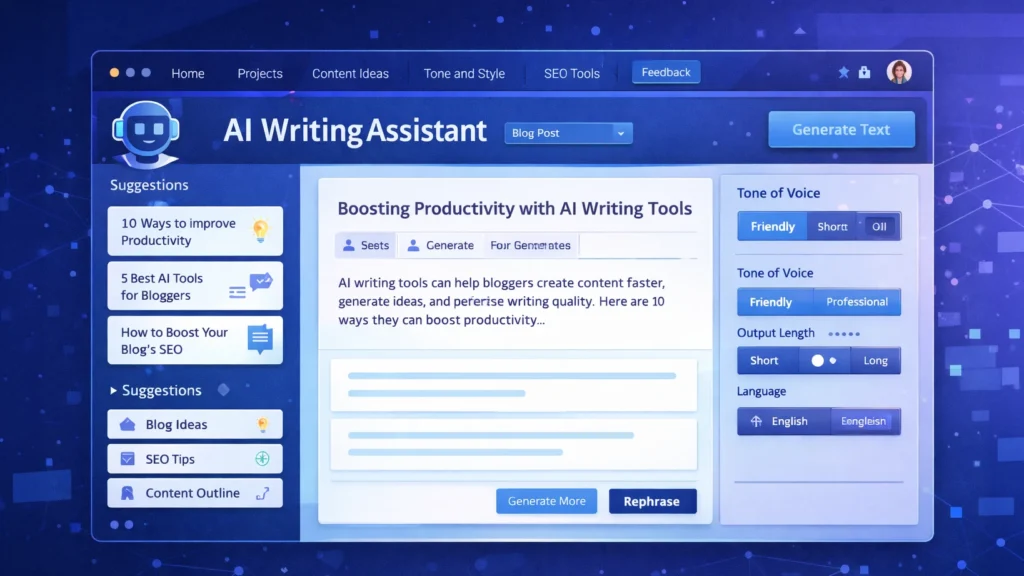
    Screenshot-style illustration of an AI writing assistant dashboard showing blog content suggestions, SEO tips, and tone settings for generating AI-powered blog posts.
    An AI writing assistant dashboard displaying content suggestions, blog ideas, and tone settings used by bloggers to generate and edit articles efficiently.

    1. ChatGPT

    ChatGPT has become one of the most popular AI writing assistants used by bloggers and content creators. It can generate article ideas, outlines, paragraphs, and full drafts with simple prompts.

    Key Features

    • Blog topic generation
    • Article outlines and drafts
    • Content rewriting and editing
    • Brainstorming ideas

    Pros

    • Very flexible writing assistant
    • Supports multiple writing styles

    Cons

    • Requires good prompts
    • Content still needs editing and fact-checking

    Best For

    Bloggers who want a versatile AI assistant for brainstorming and writing drafts.

    You can try ChatGPT for free here: https://chatgpt.com/


    2. Jasper AI

    Jasper AI is one of the most advanced AI writing platforms designed for marketers and professional content creators.

    Key Features

    • Long-form blog writing
    • Marketing copy templates
    • Brand voice customization
    • Content campaign workflows

    Pros

    • High-quality output
    • Powerful marketing features

    Cons

    • Higher pricing compared to other tools
    • Slight learning curve

    Best For

    Professional bloggers and marketing teams producing high volumes of content.

    Try Jasper AI here → https://www.jasper.ai/


    3. Copy.ai

    Copy.ai focuses heavily on marketing copy but is also widely used by bloggers for idea generation and short-form content.

    Key Features

    • Blog idea generator
    • Social media content creation
    • Marketing copy templates
    • Quick draft generation

    Pros

    • Easy to use
    • Excellent for brainstorming

    Cons

    • Limited long-form writing capabilities

    Best For

    Bloggers who want quick inspiration and marketing copy assistance.

    Try Copy.ai here → Copy AI


    4. Writesonic

    Writesonic combines AI writing capabilities with SEO optimization tools, making it popular among bloggers and marketers.

    Key Features

    • Blog article generator
    • SEO-focused writing tools
    • Content rewriting and editing
    • Marketing copy creation

    Pros

    • Good for SEO content
    • Supports multiple writing formats

    Cons

    • Output may require manual editing

    Best For

    Bloggers who want AI assistance with SEO-optimized content.

    Try Writesonic here


    5. Rytr

    Rytr is known as one of the most affordable AI writing tools available today.

    Key Features

    • Blog writing assistant
    • Tone customization
    • Content rewriting
    • Multi-language support

    Pros

    • Budget friendly
    • Simple and easy interface

    Cons

    • Less advanced than premium tools

    Best For

    Beginner bloggers looking for an affordable AI writing solution.

    Try Rytr here →


    6. Notion AI

    Notion AI integrates AI writing capabilities directly into the Notion productivity platform.

    Key Features

    • AI document editing
    • Writing suggestions
    • Content summarization
    • Project organization

    Pros

    • Excellent for productivity workflows
    • Ideal for managing content ideas

    Cons

    • Limited marketing-focused features

    Best For

    Bloggers who manage writing projects and ideas within Notion.

    Try Notion AI here →


    AI Writing Tools Comparison Table

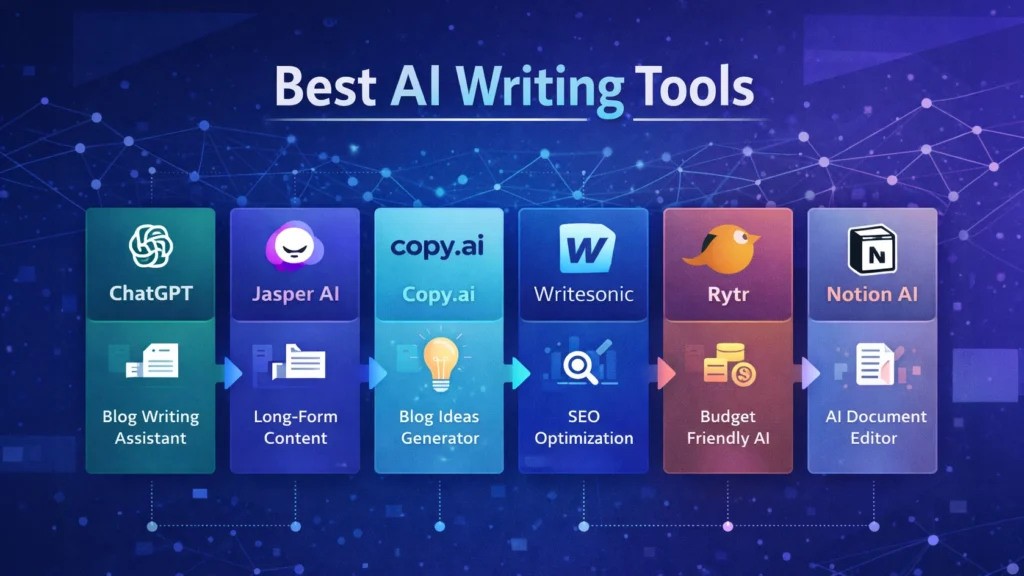
    Infographic comparing popular AI writing tools including ChatGPT, Jasper AI, Copy.ai, Writesonic, Rytr, and Notion AI with their key features for bloggers.
    Visual comparison chart of leading AI writing tools such as ChatGPT, Jasper AI, Copy.ai, Writesonic, Rytr, and Notion AI, highlighting their main capabilities for blogging and content creation.
    ToolBest ForKey FeaturePricing
    ChatGPTBloggersFlexible writing assistantFreemium
    Jasper AIMarketersLong-form AI writingPaid
    Copy.aiMarketing contentIdea generationFreemium
    WritesonicSEO bloggersSEO writing toolsPaid
    RytrBeginnersBudget-friendly AI writingLow cost
    Notion AIProductivityWriting inside workspacePaid

    Best AI Marketing Tools for Small Businesses to Automate Marketing and Grow Faster

    Practical Use Cases for Bloggers

    Bloggers use AI writing tools in several ways to improve productivity and efficiency.

    Content Idea Generation

    AI tools can quickly generate blog topic ideas based on keywords or niche themes.

    Blog Outlines

    Instead of starting from a blank page, bloggers can create structured outlines using AI.

    Draft Writing

    AI tools can produce first drafts that writers can edit and refine.

    Editing and Optimization

    Some AI tools help improve clarity, grammar, and readability.

    These workflows allow bloggers to focus more on creativity and strategy while automation handles repetitive tasks.


    Benefits and Limitations ⚖️

    While AI writing tools offer many advantages, they still require human oversight.

    Benefits

    • Faster content production
    • Improved productivity
    • Easier brainstorming
    • Scalable blogging workflows

    Limitations

    • AI content requires fact checking
    • Tone may need human editing
    • Some tools generate generic text

    The best results come from combining AI assistance with human creativity and expertise.


    How to Get Started with AI Writing Tools 🚀

    If you are new to AI writing tools, start with a simple workflow.

    1. Choose a topic and research keywords.
    2. Use AI to generate an outline.
    3. Draft the article using AI assistance.
    4. Edit the content to improve accuracy and tone.
    5. Optimize the article for SEO before publishing.

    With practice, bloggers can significantly reduce the time required to produce high-quality content.


    Conclusion

    AI writing tools are rapidly transforming how bloggers create content. From generating ideas to drafting full articles, these tools help streamline the blogging process and improve productivity.

    The key is choosing the right tool for your workflow. Beginners may prefer flexible tools like ChatGPT, while professional bloggers and marketing teams often benefit from advanced platforms such as Jasper AI.

    When used correctly, AI writing tools can help bloggers publish more consistently, scale their content strategy, and grow their online audience in an increasingly competitive digital landscape.

  • ·

    Character Consistency: Midjourney vs. Flux

    If you have ever tried to make an AI comic book or a storyboard, you know the pain.

    You generate a stunning protagonist in Scene 1. Let’s call her “Maya, a cyberpunk hacker with a neon blue undercut.” She looks perfect.

    Then you write the prompt for Scene 2: “Maya sitting in a cafe drinking coffee.”

    Suddenly, Maya has a bob cut. Her jacket changed from leather to denim. Her face structure looks like she aged ten years or turned into her own cousin. The immersion is broken.

    For years, this “Shapeshifter Problem” was the wall that separated “cool AI art” from “actual storytelling.” But in 2026, the wall is crumbling. We now have specific tools designed to lock in a character’s identity.

    We put the two heavyweights—Midjourney and Flux—to the test. Here is who wins the Consistency Battle.

    The Contender: Midjourney (The --cref King)

    Midjourney remains the king of aesthetics, but its “Character Reference” (--cref) feature is what storytellers rely on.

    • How it works: You generate your “Master Image” of Maya. You copy the URL. Then, in your next prompt, you add --cref [url].
    • The Experience: It is shockingly good at capturing the vibe and facial features. In our test, Midjourney kept Maya’s neon hair and facial structure consistent about 85% of the time.
    • The Downside: Midjourney is stubborn. It loves to “prettify” things. If you try to put Maya in a gritty, ugly situation, the AI fights you to make it look cinematic. It also struggles with specific clothing consistency. Maya’s face stays the same, but her outfit tends to hallucinate new zippers and pockets in every frame.

    The Challenger: Flux (The Control Freak)

    Flux (specifically the specialized fine-tunes available in 2026) has taken the open-source world by storm.

    • How it works: Flux relies on “LoRAs” (Low-Rank Adaptation). Think of it as a mini-brain training. You upload 10 photos of a character, and the model learns who they are.
    • The Experience: This is the professional’s choice. Once Flux “knows” Maya, it doesn’t just guess; it understands her geometry. You can rotate her, change the lighting, or put her in a spacesuit, and the face remains identical.
    • The Downside: The learning curve is steep. You aren’t just typing a prompt; you are managing a workflow. You need a decent GPU or a cloud host like Fal.ai or Replicate to run it efficiently.

    The Verdict: Which One Do You Need?

    Choose Midjourney if: You are making a mood board, a pitch deck, or a children’s book where “close enough” is okay. It is fast, easy, and the lighting is always beautiful. The --cref tag is enough to fool the casual eye.

    Choose Flux if: You are building a graphic novel or a recurring brand mascot. If you need the character to wear the exact same logo on their shirt in panel 1 and panel 50, Flux is the only tool that offers that level of rigid consistency.

    The days of the shapeshifter are over. Pick your weapon and start telling your story.

  • ·

    High-ROI AI Ad Platforms for Solo Businesses

    If you are a solo entrepreneur or running a boutique agency targeting the US and UK markets, you already know the pain of sky-high Cost Per Clicks (CPCs). Competing in high-value B2B and SaaS niches means you are going up against massive corporate marketing budgets.

    To win, you can’t just throw money at Google and Meta and hope for the best. You need an advertising ecosystem that acts faster and smarter than a human media buyer ever could. Programmatic advertising and AI-driven ad optimization used to be reserved for Fortune 500 companies. Today, they are the secret weapons for lean digital businesses looking to spend large budgets with surgical precision.

    Here at AI Growth Gear, we constantly test the backend systems that drive real revenue. Operating under the Enoxx News Private Limited umbrella, Editor-in-Chief Ajay K Saklanii emphasizes that scaling digital growth requires removing human error from ad bidding. Here are the top AI advertising platforms to automate and scale your media buying in 2026.

    Albert.ai: The Autonomous Media Buyer

    Most AI ad tools are essentially just analytics dashboards that tell you what you should do. Albert.ai is different—it is a true autonomous doer.

    The Agency Play: Albert plugs directly into your existing search, social, and programmatic tech stack. Instead of a junior media buyer logging in daily to tweak bids, Albert analyzes the landscape and makes micro-adjustments 24/7. It shifts budgets toward high-performing channels, pauses fatiguing creatives, and actively bids based on real-time market conditions. If you are managing multiple high-ticket client accounts, Albert acts as an entirely automated performance marketing department.

    Lemon AI: The Predictive ROAS Engine

    When you are spending heavily on user acquisition (UA), waiting 90 days to see if a campaign is profitable is a luxury solo businesses don’t have. Lemon AI focuses heavily on predictive analytics to eliminate that waiting game.

    The Agency Play: Lemon AI’s models analyze user behavior almost immediately after an interaction (like an app install or a lead form submission) and predict that user’s Lifetime Value (LTV) and Return on Ad Spend (ROAS). For boutique agencies running campaigns in gaming, e-commerce, or B2B SaaS, this means you can aggressively scale up winning campaigns within days—rather than weeks—because the AI has already predicted the long-term profitability of the traffic.

    AdRoll: The Cross-Channel Retargeting Giant

    In the B2B world, high-value clients rarely convert on the first click. The buying journey is long, and staying top-of-mind is critical. AdRoll remains one of the most powerful platforms for closing the loop on your hard-earned traffic.

    The Agency Play: AdRoll consolidates your audience data and follows your highest-intent visitors across the web. Whether they are scrolling through a news site, checking their social feeds, or watching streaming content via Connected TV (CTV), AdRoll’s AI dynamically serves them hyper-relevant retargeting ads. It takes the guesswork out of cross-channel attribution, ensuring your brand stays visible exactly where your prospects spend their time.

    Bidscube: The Programmatic Trading Floor

    Programmatic advertising involves buying ad space in real-time milliseconds before a webpage loads. Historically, navigating Demand-Side Platforms (DSPs) and Ad Exchanges required a massive agency setup. Bidscube democratizes this ecosystem.

    The Agency Play: Bidscube provides the infrastructure that allows solo operators to bid on premium ad inventory globally. Its algorithms analyze hundreds of data signals—from device IDs to contextual relevance—in less than 100 milliseconds to place your ads in front of the right eyes at the lowest possible clearing price. It gives lean agencies omnichannel scale and complete cost transparency, ensuring every cent of a client’s large ad budget is deployed efficiently.

    The Bottom Line

    Managing a six-figure ad spend shouldn’t require a ten-person team. By leveraging platforms like Albert.ai, Lemon AI, AdRoll, and Bidscube, boutique agencies can compete on the global stage. These tools optimize bids, predict revenue, and secure premium inventory automatically, turning ad operations into a high-ROI, self-driving machine.

  • ·

    Top AI Suites for Aesthetic Automation

    When we talk about scaling a digital agency, the conversation usually jumps straight to data, spreadsheets, and cold outreach. But for design-centric solo entrepreneurs and boutique brand builders targeting high-end clients in the US and UK, the real challenge is scaling taste.

    How do you multiply your creative output without diluting the visual identity that makes your brand premium?

    Here at AI Growth Gear (a division of the Enoxx News network), our Editor-in-Chief Ajay K Saklanii frequently points out that the future of brand building for solo operators lies in “aesthetic automation.” It is the exact intersection where high-end design principles meet autonomous tech. You aren’t just generating content; you are building a self-sustaining visual engine backed by Enoxx News Private Limited’s growth philosophies.

    If you want to command higher retainer fees while keeping your overhead low, these are the visual marketing and aesthetic automation suites you need to integrate into your workflow in 2026.

    Canva Magic Studio: The All-in-One Design Engine

    Canva has quietly transitioned from a simple template builder into an enterprise-grade AI powerhouse. Magic Studio isn’t just about generating one-off images; it’s about workflow velocity.

    The Agency Play: For boutique agencies, maintaining absolute visual consistency across campaigns is non-negotiable. With Canva’s Magic Switch and Magic Grab, you can take a single hero asset—say, a custom graphic for a client’s Q3 campaign—and autonomously resize, reformat, and translate it across every platform in seconds. Combined with their Brand Hub, which locks in fonts, hex codes, and brand voices, you can hand off bulk content creation to junior team members without worrying about them breaking brand guidelines.

    Adobe Firefly: Commercial-Safe Generative Art

    While other generative AI image models get the viral social media attention, Adobe Firefly is the tool actually built for commercial agency use. The biggest risk with AI-generated visuals for high-end clients is copyright infringement. Firefly is trained entirely on licensed and public domain content, making it commercially safe.

    The Agency Play: Firefly’s “Style Kits” allow agencies to train the AI directly on a client’s proprietary assets. Need fifty variations of a product shot for A/B testing on a high-CPC programmatic ad campaign? You can generate them instantly, ensuring every single variation perfectly matches the client’s established mood board, lighting, and texture preferences. It brings enterprise-level personalization down to the solo operator level.

    Jasper Art: The Copy-to-Visual Bridge

    Jasper started as an AI writing assistant, but Jasper Art has evolved into a crucial tool for marketers who need their copy and visuals to work in perfect tandem.

    The Agency Play: High-converting AdSense and affiliate campaigns rely heavily on visual context. Jasper allows you to generate high-fidelity blog thumbnails, ad creatives, and supporting graphics directly alongside your SEO-optimized copy. It eliminates the friction of bouncing between a copywriter and a graphic designer. For solo entrepreneurs running content-heavy sites, it means you can hit “publish” faster while maintaining a premium look that attracts top-tier advertisers.

    SocialBee: The Visual Publishing Orchestrator

    Creating the assets is only half the battle. Distributing them beautifully is the other. SocialBee has emerged as a top-tier automated publishing suite because of how seamlessly it connects the dots between creation and distribution.

    The Agency Play: SocialBee integrates directly with Canva and Unsplash, allowing you to pull your newly generated AI assets straight into your publishing queue. Its AI Copilot can then generate tailored captions and schedule the content into category-based buckets (e.g., “Promotional,” “Behind the Scenes,” “Educational”). For a lean agency, this means you can build a 90-day, visually stunning, multi-channel social media calendar in an afternoon, put it on autopilot, and get back to closing deals.

    The Bottom Line

    Aesthetic automation isn’t about replacing the artist; it’s about removing the friction from the art. By building a tech stack that respects brand consistency—using Canva, Firefly, Jasper, and SocialBee—you can deliver premium, high-volume visual marketing that justifies premium pricing and attracts the highest-paying digital advertisers.

  • ·

    Top No-Code AI Agent Builders for Agencies

    Scaling an agency in the US or UK used to mean one thing: hiring more people. Every new client meant adding more project managers, more data entry clerks, and more administrative bloat. But operations managers are waking up to a new reality. You don’t need a bigger team to handle enterprise-level capacity; you need better internal infrastructure.

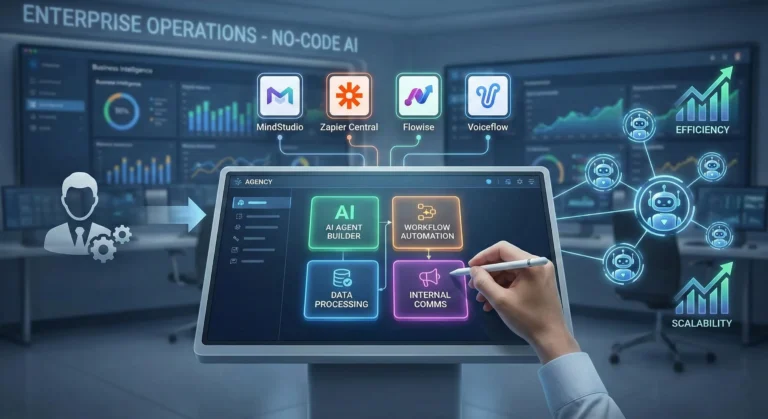
    The secret to maximizing agency margins right now is replacing repetitive administrative headcount with custom AI agents. By leveraging no-code enterprise automation, you can build digital employees that handle your backend operations 24/7. Here at AI Growth Gear, we prioritize software that directly impacts the bottom line. If you want to deploy sophisticated business intelligence and workflow software without writing a line of code, these are the platforms you need.

    MindStudio: The AI Employee Factory

    MindStudio is arguably the most robust platform right now for building highly specialized, multi-step AI agents. It allows you to build custom interfaces and connect different foundation models (like Claude 3 or GPT-4) depending on the specific task.

    • The Operations Play: Stop paying junior staff to summarize endless client discovery calls and format them into briefs. With MindStudio, you can build an internal “Strategy Agent.” You upload the raw call transcript, and the agent automatically extracts the core business objectives, cross-references them with your agency’s standard operating procedures (SOPs), and outputs a polished, ready-to-execute project brief. It turns hours of manual administrative work into a three-second automated workflow.

    Zapier Central: The Action-Oriented Assistant

    You likely already use Zapier to connect your apps, but Zapier Central transforms those passive connections into an active, conversational AI workspace. It allows you to build bots that sit directly on top of your live data.

    • The Operations Play: Zapier Central excels at data triage. Imagine a custom agent monitoring your high-value lead inbox. When a new enterprise inquiry comes in, the agent reads the context, automatically queries your CRM to see if they are an existing contact, drafts a personalized response based on their industry, and pings the correct account executive in Slack with a summary. It acts as an autonomous executive assistant that never drops the ball, perfectly optimizing your agency’s lead response times.

    Flowise: Visual LLM Orchestration

    For agencies handling vast amounts of proprietary data or complex technical documentation, Flowise is a game-changer. It provides a drag-and-drop visual interface for LangChain, meaning you can build highly complex AI logic flows without needing a Python developer.

    • The Operations Play: Build a secure, internal “Knowledge Retrieval Agent” for your team. By connecting Flowise to your agency’s internal Google Drive or Notion workspace, your team can simply ask the agent questions like, “What were the exact deliverables we promised in the Q3 contract for Client X?” The agent searches the secure internal database and retrieves the exact clause in seconds. This eliminates the endless back-and-forth messaging between departments and streamlines overall business intelligence.

    Voiceflow: Conversational Process Management

    While typically known for building customer-facing chatbots, smart operations managers are using Voiceflow to build robust internal conversational interfaces.

    • The Operations Play: Employee onboarding is a massive drain on operational resources. With Voiceflow, you can build an interactive “HR & Onboarding Agent.” Instead of handing new hires a static 50-page PDF of company policies, they interact with the Voiceflow agent. It can guide them through setting up their software stack, answer specific questions about payroll schedules, and train them on agency methodologies. It guarantees a consistent, scalable onboarding experience without tying up your senior staff.

    The Bottom Line

    B2B margins are won and lost in the backend. By investing in no-code workflow software like MindStudio, Zapier Central, Flowise, and Voiceflow, you aren’t just buying tools—you are building a scalable, automated workforce. This allows you to take on larger enterprise contracts without proportionately increasing your overhead.

  • ·

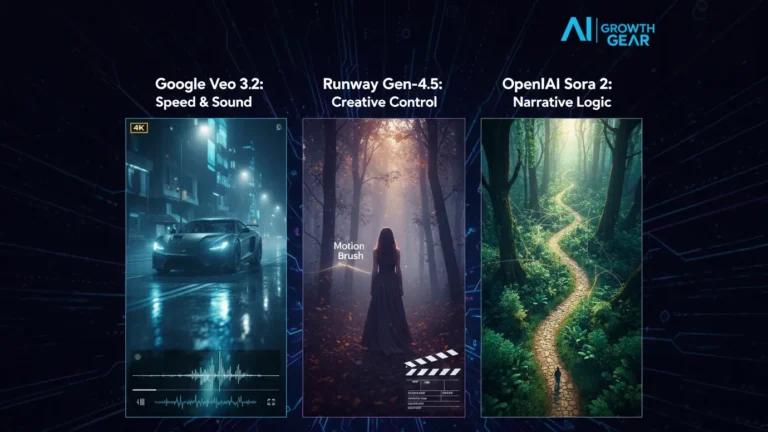
    Cinematic Showdown: Google Veo vs. Runway vs. Sora (2026 Comparison)

    In the film world, choosing a camera is a statement of style. An Arri Alexa feels different than a RED. In 2026, choosing an AI Video Generator is no different. You are choosing the “soul” of your footage.

    At AI Growth Gear, we’ve put the top three engines through a rigorous “Director’s Test.” Here is how they stack up for professional agency use.

    The Competitors at a Glance

    FeatureGoogle Veo 3.2Runway Gen-4.5OpenAI Sora 2
    Primary StrengthIntegrated Audio & 4K ClarityGranular Creative ControlNarrative Logic & Physics
    Best ForReady-to-use Social AdsHigh-End Brand FilmsLong-Form Storytelling
    WeaknessCan feel “too perfect”Steep learning curveLimited public API access

    1. Google Veo 3.2: The “All-in-One” Workhorse

    Google has leveraged its vast data to create the most stable engine. The standout feature in 2026 is Native Audio Synchronization. When Veo generates a video of a car splashing through rain, it generates the exact sound of that splash perfectly synced to the frame.

    • The Aesthetic: It leans toward commercial realism. It’s vibrant, sharp, and safe.
    • The Director’s Take: “If you need an ad for a UK real estate firm or a US tech startup that needs to look ‘Apple-clean’ in ten minutes, Veo is your gear.”

    2. Runway Gen-4.5: The Artist’s Precision Tool

    Runway remains the favorite for those of us with a NIFT or film background. Their “Motion Brush 3.0” and “Director Mode” allow you to tell the AI exactly where to move the camera (pan, tilt, zoom) and which specific elements should move within the frame.

    • The Aesthetic: Moody, textured, and artistic. It handles “Cinematic Grain” and lighting better than anyone else.
    • The Director’s Take: “Runway doesn’t just ‘generate’; it ‘collaborates.’ It’s the only tool that lets me maintain a specific brand texture without the AI taking over the creative wheel.”

    3. OpenAI Sora 2: The Physics Master

    Sora 2 is still the king of Spatial Consistency. If a character walks behind a tree and comes out the other side, they look identical. Most other AIs still “glitch” the details. Sora understands that a glass of water should reflect the room, and gravity should pull objects down naturally.

    • The Aesthetic: Hyper-realistic and expansive. It excels at wide, sweeping “Drone” shots.
    • The Director’s Take: “Sora is for the ‘Big Picture.’ It’s perfect for world-building or creating complex scenes where physical logic cannot be compromised.”

    The Verdict: Which Gear Should You Pick?

    • Choose Google Veo if your priority is Speed and Sound. It’s the ultimate tool for high-volume content agencies where “done is better than perfect.”
    • Choose Runway if your priority is Aesthetic Control. If your brand relies on a specific “look” or mood, Runway is the only tool that respects your creative direction.
    • Choose Sora if your priority is Realism and Scale. When the physics of the scene must be flawless, Sora is the undisputed leader.

    Our Recommendation for 2026

    For most boutique agencies, a Runway + Veo hybrid workflow is the winner. Use Runway to create the “Hero” visuals that define your style, and use Veo to quickly scale the supporting content with integrated sound.